





# 1001-1200QS World University Rankings

52Undergrad & Postgrad Programmes

2 % International students


About Universidad ORT Uruguay
Universidad ORT Uruguay is a private, not-for-profit university located in Montevideo, Uruguay, recognised by the Uruguayan Ministry of Education and Culture as a degree-granting university since 1996.
The institution originated in 1942 as a technical school and has evolved into one of the country’s largest and most prestigious private universities. ORT is the Uruguayan member of World ORT, an international educational network founded in 1880, which brings together non-governmental, non-profit institutions committed to expanding educational opportunity worldwide.
The university’s mission is to contribute to national development through applied research, strong links with the productive and social sectors, and the training of trustworthy professionals capable of performing effectively in a knowledge-based society.
Its educational philosophy emphasises quality, innovation, and adherence to ethical standards in professional practice. Graduates are prepared to adapt to change with flexibility and critical thinking, to work effectively in teams and to operate confidently in international environments.
Universidad ORT Uruguay offers more than 90 programmes at undergraduate, postgraduate and technical levels across a broad range of disciplines, including Architecture, Engineering, Biotechnology, Management, Economics, International Relations, Design, Animation, Communication, Education, and Dermatology.
Academic activity is organised into five faculties and two institutes: the School of Administration and Social Sciences, School of Engineering, School of Architecture, School of Communication, School of Design, Institute of Education and Institute of Dermatology.
The university has over 16,000 students enrolled, with approximately 7% in postgraduate programmes, 54% in undergraduate degrees and 39% in vocational programmes (ISCED levels 5–8). Each year, more than 1,400 students graduate, and the average employment rate for graduates in recent years is above 97%.
The alumni community exceeds 25,000 professionals, many of whom have created and lead their own companies or social enterprises. ORT employs more than 1,800 academic staff, including professors and researchers, a significant proportion of whom work in high-dedication regimes that combine teaching and research.
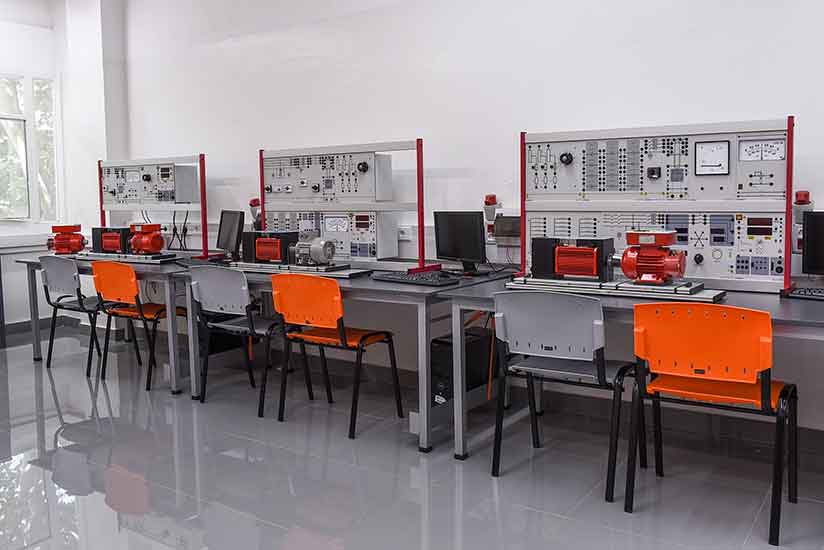
Teaching at ORT is strongly practice-oriented and complemented by laboratory work, independent study, literature review and fieldwork. The university has invested heavily in laboratories and specialised facilities for information technologies, electronics, biotechnology, audiovisual production, design, construction, 3D printing and prototyping, as well as TV production and videoconferencing. Students and staff have access to two libraries with extensive print and audiovisual collections, together with a virtual library providing full-text access to international academic databases.
Entrepreneurship and innovation are core elements of the institutional profile. The Center for Innovation and Entrepreneurship (CIE) functions as an innovation laboratory that brings together all academic areas, promoting entrepreneurial attitudes among students and graduates and supporting the creation of new ventures. ORT co-founded Ingenio, Uruguay’s first business incubator for IT and telecommunications, and operates incubation programmes and other initiatives that foster technology-based start-ups and industry collaboration.
The university is highly internationalised. It maintains academic cooperation agreements with more than 200 universities and organisations around the world, enabling student and staff exchanges, joint research and curriculum collaboration.
ORT is a member of leading international associations such as the International Association of Universities (IAU), the Unión de Universidades de América Latina y el Caribe (UDUALC) and the Asociación Universitaria Iberoamericana de Postgrado (AUIP). At faculty level it holds memberships in organisations including AACSB, EFMD, PRME, the Business Graduates Association and several discipline-specific international networks.
Universidad ORT Uruguay is widely recognised in international rankings and accreditation schemes. It participates in the MERCOSUR Academic Quality Accreditation Mechanism (ARCU-SUR) for several of its degrees and holds international accreditation for its MBA from the Association of MBAs (AMBA).
In rankings produced by QS, the university is placed among the top 800 universities globally in the QS World University Rankings 2024, ranks 82nd in the QS World University Rankings: Latin America & The Caribbean 2024, and appears among the top 550 institutions worldwide for graduate employability. ORT and its programmes are also regularly recognised in Times Higher Education rankings (World University Rankings, Latin America Rankings and Impact Rankings), as well as in regional business-school and subject-specific rankings.
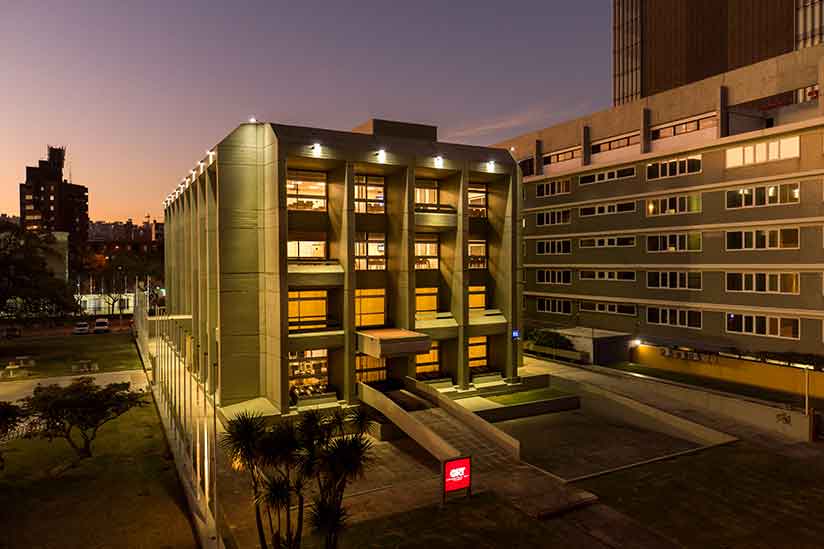
The institution operates two main campuses in Montevideo —Campus Centro and Campus Pocitos— which together provide nearly 30,000 m² of space dedicated to teaching, laboratories, studios, and student services. These campuses house modern classrooms equipped with advanced educational technologies, collaborative workspaces and dedicated areas for innovation and entrepreneurship. The university also offers HyFlex and online learning environments that extend access and flexibility for students across Uruguay and abroad.
As a non-profit, private university with a strong emphasis on science, technology, management and design, Universidad ORT Uruguay positions itself as an innovative, entrepreneurial and socially committed institution.
Its combination of high academic standards, strong industry links, international orientation and value-based education underpins its contribution to Uruguay’s human capital development and to the broader Latin American higher education landscape.
About Universidad ORT Uruguay
Universidad ORT Uruguay is a private, not-for-profit university located in Montevideo, Uruguay, recognised by the Uruguayan Ministry of Education and Culture as a degree-granting university since 1996.
The institution originated in 1942 as a technical school and has evolved into one of the country’s largest and most prestigious private universities. ORT is the Uruguayan member of World ORT, an international educational network founded in 1880, which brings together non-governmental, non-profit institutions committed to expanding educational opportunity worldwide.
The university’s mission is to contribute to national development through applied research, strong links with the productive and social sectors, and the training of trustworthy professionals capable of performing effectively in a knowledge-based society.
Its educational philosophy emphasises quality, innovation, and adherence to ethical standards in professional practice. Graduates are prepared to adapt to change with flexibility and critical thinking, to work effectively in teams and to operate confidently in international environments.
Universidad ORT Uruguay offers more than 90 programmes at undergraduate, postgraduate and technical levels across a broad range of disciplines, including Architecture, Engineering, Biotechnology, Management, Economics, International Relations, Design, Animation, Communication, Education, and Dermatology.
Academic activity is organised into five faculties and two institutes: the School of Administration and Social Sciences, School of Engineering, School of Architecture, School of Communication, School of Design, Institute of Education and Institute of Dermatology.
The university has over 16,000 students enrolled, with approximately 7% in postgraduate programmes, 54% in undergraduate degrees and 39% in vocational programmes (ISCED levels 5–8). Each year, more than 1,400 students graduate, and the average employment rate for graduates in recent years is above 97%.
The alumni community exceeds 25,000 professionals, many of whom have created and lead their own companies or social enterprises. ORT employs more than 1,800 academic staff, including professors and researchers, a significant proportion of whom work in high-dedication regimes that combine teaching and research.
Teaching at ORT is strongly practice-oriented and complemented by laboratory work, independent study, literature review and fieldwork. The university has invested heavily in laboratories and specialised facilities for information technologies, electronics, biotechnology, audiovisual production, design, construction, 3D printing and prototyping, as well as TV production and videoconferencing. Students and staff have access to two libraries with extensive print and audiovisual collections, together with a virtual library providing full-text access to international academic databases.
Entrepreneurship and innovation are core elements of the institutional profile. The Center for Innovation and Entrepreneurship (CIE) functions as an innovation laboratory that brings together all academic areas, promoting entrepreneurial attitudes among students and graduates and supporting the creation of new ventures. ORT co-founded Ingenio, Uruguay’s first business incubator for IT and telecommunications, and operates incubation programmes and other initiatives that foster technology-based start-ups and industry collaboration.
The university is highly internationalised. It maintains academic cooperation agreements with more than 200 universities and organisations around the world, enabling student and staff exchanges, joint research and curriculum collaboration.
ORT is a member of leading international associations such as the International Association of Universities (IAU), the Unión de Universidades de América Latina y el Caribe (UDUALC) and the Asociación Universitaria Iberoamericana de Postgrado (AUIP). At faculty level it holds memberships in organisations including AACSB, EFMD, PRME, the Business Graduates Association and several discipline-specific international networks.
Universidad ORT Uruguay is widely recognised in international rankings and accreditation schemes. It participates in the MERCOSUR Academic Quality Accreditation Mechanism (ARCU-SUR) for several of its degrees and holds international accreditation for its MBA from the Association of MBAs (AMBA).
In rankings produced by QS, the university is placed among the top 800 universities globally in the QS World University Rankings 2024, ranks 82nd in the QS World University Rankings: Latin America & The Caribbean 2024, and appears among the top 550 institutions worldwide for graduate employability. ORT and its programmes are also regularly recognised in Times Higher Education rankings (World University Rankings, Latin America Rankings and Impact Rankings), as well as in regional business-school and subject-specific rankings.
The institution operates two main campuses in Montevideo —Campus Centro and Campus Pocitos— which together provide nearly 30,000 m² of space dedicated to teaching, laboratories, studios, and student services. These campuses house modern classrooms equipped with advanced educational technologies, collaborative workspaces and dedicated areas for innovation and entrepreneurship. The university also offers HyFlex and online learning environments that extend access and flexibility for students across Uruguay and abroad.
As a non-profit, private university with a strong emphasis on science, technology, management and design, Universidad ORT Uruguay positions itself as an innovative, entrepreneurial and socially committed institution.
Its combination of high academic standards, strong industry links, international orientation and value-based education underpins its contribution to Uruguay’s human capital development and to the broader Latin American higher education landscape.
Brochures
Available programmes

University information
Applying to Universidad ORT Uruguay is a clear and personalised process supported by online tools and academic guidance. Prospective students can explore the university’s undergraduate degrees, technical programmes, postgraduate degrees, and professional development courses through the official website, where they will find information about intakes, tuition fees, scholarships, and application steps.
Applicants are encouraged to begin by choosing their programme and booking an advisory meeting, either online or on campus. During this meeting, they can receive guidance about academic requirements, tuition fees, payment options, scholarships and the next steps in the admissions process.
For undergraduate and technical programmes, applicants must have completed upper secondary education or an equivalent qualification. Some programmes may require a specific academic track or related previous studies. Applicants who have completed university-level courses at another institution may request an academic evaluation for possible credit transfer.
For postgraduate programmes, admission is based on academic background, professional experience and the specific requirements of each programme. Depending on the programme, applicants may be asked to attend an interview, submit a CV and academic documentation, and complete an admission test such as the BAT, PAEP or an equivalent recognised test.
International applicants are welcome at Universidad ORT Uruguay and receive support throughout the admissions process. Students who completed previous studies abroad may need to submit legalised or apostilled academic documents. The university’s International Office and admissions teams provide guidance on academic requirements, mobility options and practical steps for studying in Uruguay.
Applications are managed through the university’s online admissions platform. Through this system, applicants can complete their application, submit required information and, when applicable, apply for scholarships within the established deadlines.
Universidad ORT Uruguay offers a student-centred admissions process designed to help each applicant choose the right programme and prepare for a successful academic experience.
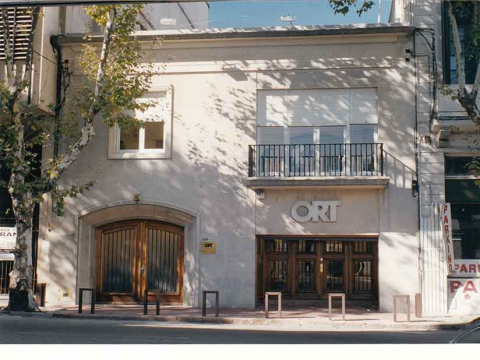
Universidad ORT Uruguay is an urban, multi-campus university located in Montevideo. Its facilities are organized around two main campuses – Campus Centro in the downtown area and Campus Pocitos in a residential, seaside neighbourhood – together with the ORT Rambla academic space on the coastal avenue.
The institution’s built academic infrastructure exceeds 29,700 m², concentrating teaching, research, student services and postgraduate activities in these three interconnected sites.
The university’s facilities also include the Innovation and Entrepreneurship Center (Centro de Innovación y Emprendimientos, CIE), a cross-university hub that fosters an entrepreneurial and innovation-oriented culture among students, graduates and academic staff. The CIE develops training activities, mentoring and incubation programmes, and coordinates an ecosystem that links the university with companies, society and the financial sector, helping transform early-stage ideas into innovative ventures. Recognized at national level as an accredited business incubator, it supports pre-incubation and consolidation of start-ups and provides shared workspaces and laboratory environments where projects from all academic areas of the university can converge and collaborate.
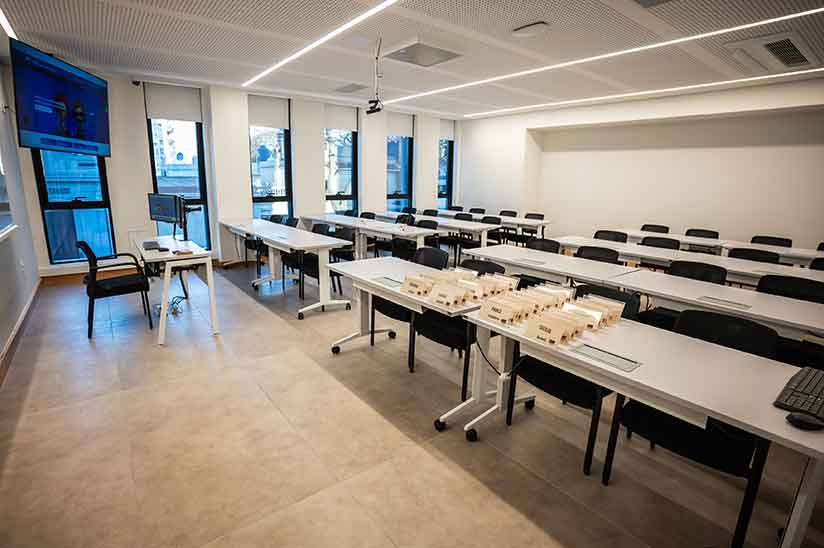
Teaching and learning take place in more than 110 classrooms equipped for hybrid delivery, allowing simultaneous on-campus and remote participation through HyFlex-type technology. These rooms are complemented by project rooms designed for team work, fully equipped videoconferencing rooms that connect students and faculty with international guests, and lecture halls, auditoriums and seminar rooms fitted with modern multimedia systems.
Laboratory infrastructure is a central component of the university’s facilities. Across Campus Centro and Campus Pocitos there are numerous teaching and research laboratories in engineering, biotechnology, architecture, design and communication, including electronic and telecommunications labs, prototype design and construction workshops, and specialized biotechnology laboratories.
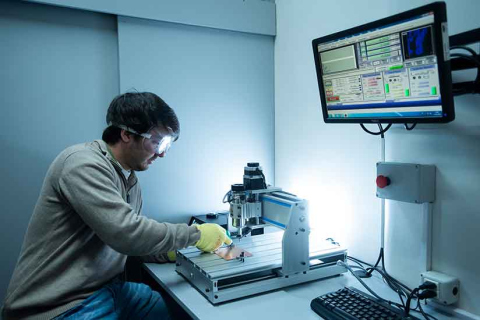
The university hosts a 3D prototyping lab – the first of its kind in Uruguay – which complements design workshops for metal, wood, plastics and textiles, as well as the national Biotechnology Research and Innovation Center (CBI+I), a 300 m² facility with biosafety level 1 and 2 rooms, fermentation and protein purification equipment, and shared molecular biology spaces that support collaboration with industry.
Digital media and communication facilities include TV and radio studios with HD cameras, professional-standard control rooms and post-production suites, together with a comprehensive audiovisual production complex used for both teaching and external projects. These spaces are supported by design laboratories and specialist multimedia classrooms, enabling practical work in animation, video games, audiovisual production, journalism, and advertising.
The university’s library system operates as an integrated network composed of the Centro and Pocitos libraries, each located close to the main teaching buildings. Together, they provide tens of thousands of print volumes (over 87,000), more than 130 titles of specialized periodicals, and a film collection with over 3,500 titles. In addition, there is a virtual library with access to major bibliographic databases, journals, e-books, theses and other academic resources, complemented by services such as extended-hours return boxes and online help desks.
Information and communication technologies are embedded in the campus infrastructure. An advanced data network connects more than 1,800 computers to high-speed Internet through high-capacity fiber-optic links, providing campus-wide Wi-Fi coverage. These resources support computer labs, discipline-specific software environments and online learning platforms that are used across all faculties and schools.
Beyond academic spaces, facilities also support student life, sports and community engagement. The Sport and Social Activities area coordinates training and competition in basketball (including an over-35 team), men’s and women’s futsal, women’s handball and hockey, and men’s and women’s volleyball, providing the infrastructure needed for participation in local and international tournaments and for internal recreational leagues.
Sustainability considerations are increasingly integrated into campus management. The university’s Centro and Pocitos campuses cover more than 25,000 m² and are the focus of a structured environmental-management programme (ORT Recicla) that promotes waste separation, recycling and awareness among students and staff.
Together, these facilities – multi-campus teaching spaces, modern laboratories, professional media and design infrastructure, a robust library and ICT system and social areas, and sustainability initiatives – provide a comprehensive physical and technological environment that supports the university’s academic mission in science, technology, management, design and related fields.
Student life
Universidad ORT Uruguay offers an active and personalized student experience in Montevideo, one of Latin America’s safest and most welcoming capital cities. With modern urban campuses located in central and coastal areas of the city, students enjoy easy access to public transportation, cultural activities, cafés, green spaces, and the Río de la Plata waterfront.
The university combines academic excellence with a dynamic campus environment that encourages collaboration, innovation, entrepreneurship, and international exchange. Students learn in small and interactive class settings, working closely with professors and peers from diverse academic and cultural backgrounds.
International students are supported by the International Office before and during their stay in Uruguay. The university offers orientation activities, academic guidance, mentoring programs, and integration initiatives designed to help students adapt quickly to university life and local culture.
Through the Mentor Program, international students receive support from Uruguayan students who help them navigate campus life, discover Montevideo, and connect with the local community. Social activities, cultural events, outings, and student-led initiatives create opportunities to build friendships and experience daily life in Uruguay.
Universidad ORT Uruguay maintains academic cooperation agreements with more than 230 universities and institutions in 38 countries, promoting student mobility, collaborative learning, and global experiences. Each year, the university welcomes incoming exchange students from Europe, North America, Latin America, and Asia, creating an international and multicultural environment on campus.
Students also have access to courses taught in English, Spanish language support, exchange opportunities, entrepreneurship programmes, innovation initiatives, academic competitions, and extracurricular activities across different disciplines.
Student wellbeing is supported through academic advising, psychological counselling, career guidance, financial aid programs, libraries, collaborative study spaces, sports activities, and technological resources designed to enhance both academic performance and personal development.
Montevideo offers international students a high quality of life, a stable social environment, and a vibrant cultural scene. Its human scale, accessibility, and welcoming atmosphere make it an ideal destination for students seeking an international education experience in South America.
Universidad ORT Uruguay prepares students not only academically, but also professionally and personally, helping them develop the skills, global perspective, and adaptability required in today’s international environment.
Cost of Living
Montevideo offers a safe, human-scale and welcoming environment for international students. The city is walkable, has reliable public transport, and combines European and Latin American influences in its architecture, culture and daily life.
Uruguay is known for its political stability, strong institutions and high levels of safety by regional standards, which makes Montevideo a practical and accessible place to live and study.
For a typical international student sharing accommodation in Montevideo, most independent guides converge on an estimated monthly budget of about USD 600–1,000, excluding tuition fees.
This assumes a modest lifestyle (shared housing, cooking at home most of the time, using public transport). Students living alone in a private flat or with a more consumer-oriented lifestyle will need a higher budget.
A typical monthly breakdown for a student might look like this:
- Accommodation (shared flat or
student residence): approximately USD 250–600 depending on location, room
type and whether utilities are included. Guides for international students
in Uruguay usually give ranges between USD 200–700 per month for student
housing. A recent university-based estimate for Montevideo suggests that a
room in a student residence or in a family home is commonly around USD
400–600 per month.
- Food and groceries: around USD
150–300 per month if most meals are prepared at home and eating out is
occasional. Official-style education portals aimed at international
students recommend that roughly USD 300 per month on food is a realistic
benchmark.
- Public transport: Montevideo is
well served by city buses. An urban bus ride costs a little over USD 1;
with frequent use and student discounts, monthly spending on public
transport is typically in the USD 20–50 range.
- Utilities and internet: if not
included in the rent, students should allow about USD 50–100 per month for
electricity, water and home internet in a shared flat.
- Health insurance: international
students are normally required to have health coverage. Depending on
whether they use a local student health plan or private insurance, costs
typically range from USD 30–70 per month.
- Personal expenses and leisure: mobile phone, clothing, study materials, sports and social activities can add USD 50–120 per month, depending on lifestyle.
For a single adult in Montevideo, total monthly expenses including rent often fall between about USD 1,500–1,900, though student budgets are usually lower because of shared housing and more frugal consumption patterns.
These figures are indicative and can vary significantly with exchange rates, inflation, personal habits and the specific neighbourhood chosen.
Applicants are therefore advised to treat the ranges above as a planning reference rather than a fixed budget, and to review updated cost-of-living information when preparing their study plans.
Accommodation
Food
Transport
Utilities
Tuition fees
Universidad ORT Uruguay offers a broad scholarship and financial aid system designed to make high-quality private university education more accessible. Each year, the university awards more than 1,000 scholarships to new students, based on a combination of academic merit and financial need.
Scholarships are available for undergraduate degrees, technical programmes and selected postgraduate studies. Depending on the programme and the applicant’s profile, scholarships may cover a significant percentage of tuition fees and can support students throughout their studies, subject to academic performance requirements.
For undergraduate applicants, Universidad ORT Uruguay offers merit- and need-based scholarships, competitive scholarship funds, transfer scholarships for students coming from other universities, and special full or high-coverage scholarships for outstanding academic achievement. The university also promotes access to STEM fields through specific scholarship opportunities.
Students enrolling in technical programmes may apply for dedicated scholarship funds focused on employability and labour-market needs. These programmes are designed to support students seeking practical, career-oriented training in areas with strong professional demand.
Postgraduate applicants can access scholarships and tuition benefits based on academic background, professional profile, entrepreneurial experience, financial need or international status, depending on the programme. International students may also be eligible for selected scholarship opportunities and tuition reductions.
Tuition fees and funding options are reviewed individually with academic advisors. Prospective students are encouraged to request a personalised advisory meeting to learn about programme costs, scholarship deadlines, eligibility criteria and the application process.
Scholarships
Selecting the right scholarship can be a daunting process. With countless options available, students often find themselves overwhelmed and confused. The decision can be especially stressful for those facing financial constraints or pursuing specific academic or career goals.
To help students navigate this challenging process, we recommend the following articles:

How to get a full scholarship
Looking for a fully-funded scholarship to see you into university? Find out how to boost your chances of getting one.


Scholarships to study abroad
Find scholarships to study abroad with our lists of international scholarships – categorized by country, by subject, and by type of student.


Scholarship Applications: Frequently Asked Questions
Get answers to all your questions about scholarship applications, including tips on how to find scholarships and chances of success.

Employability
Universidad ORT Uruguay places employability at the centre of the student experience. The university reports an average employment rate of 97% among its graduates and has a network of more than 25,000 alumni working in Uruguay and abroad, including professionals, entrepreneurs, and founders of companies and social ventures.
Career support is available to advanced students and graduates through central and faculty-based services. Students receive guidance on job-search strategies, CV writing, interview preparation, internships, professional networking and entrepreneurship. The university also offers individual career orientation sessions to help students define their professional goals and identify the best pathways into the labour market.
Universidad ORT Uruguay maintains strong links with companies and professional sectors across all faculties. These relationships support paid internships, job opportunities, employer presentations, workshops and networking activities. The university’s Employment Month, organised since 2005, connects students and graduates with employers through stands, presentations and career-focused events across campus.
The Employment Portal provides a direct connection between students, graduates, and companies. Through the platform, employers can publish opportunities, while candidates can create profiles, receive personalised job alerts and apply to positions aligned with their academic background and professional interests.
Employability is also strengthened at faculty level. Academic units monitor graduate outcomes, maintain relationships with employers, and promote career activities connected to each discipline. The Faculty of Engineering, for example, reports a 99% average employment rate among graduates and works with more than 400 companies to facilitate internships and job opportunities.
At postgraduate level, the School of Business offers specialised MBA Career Services, including workshops, individual coaching, employer presentations, networking opportunities and alumni activities designed to support leadership and career progression.
Through practical learning, employer engagement, career guidance, entrepreneurship support and a strong alumni network, Universidad ORT Uruguay helps students and graduates build successful professional trajectories in Uruguay and internationally.
Universidad ORT Uruguay integrates internships and professional placements as a structured, institution-wide mechanism to support students’ transition into the labour market.
Through central services and faculty-based coordination, the university manages paid internships, curricular placements and international programmes that connect students and graduates with companies, public bodies and international organisations.
At institutional level, ORT offers a labour-insertion support service for advanced students and graduates, which explicitly includes the management of paid internships. This service provides information and contacts for job opportunities, coordinates internships, offers training in CV preparation and interview performance, and advises on business creation. In parallel, a dedicated support service for employers in the Faculty of Engineering formalises the internship framework: companies may request students under an internship contract, and all such internships must be remunerated.
Internships are also embedded in the curriculum of several programmes. These placements are explicitly designed to introduce selected students to the professional practice of their discipline, integrating them into work teams in their field so that they can acquire supervised experience and deepen and consolidate their knowledge.
The work methodology depends on the tasks assigned within the host team, and each student is supervised by a tutor or team leader who defines objectives, monitors progress and evaluates performance. Final evaluation is carried out by an academic board which considers the student’s written report on the work undertaken and a formal assessment provided by the workplace supervisor.
Faculty-level graduate offices reinforce this approach by supporting “prácticas profesionales o formativas” in companies. In the Faculty of Engineering, for example, the Graduate Coordination office lists support for the management of professional or training placements in companies among its core services, alongside CV optimisation, LinkedIn profile development, interview training and labour-market information. Similar wording appears in labour-insertion pages for other programmes, which explicitly include internship management as part of the support offered to students and graduates.
All internship and placement opportunities are channelled through the university’s Employment Portal, a central platform that aggregates offers for advanced students and graduates from all faculties. Companies and organisations registered as strategic partners can autonomously publish internship and job opportunities, while students and graduates create profiles and indicate their interests to receive personalised information about openings that match their professional development. The portal, relaunched in 2025, operates as the main interface between the university’s talent pool and the productive and social sectors.
Beyond national placements, ORT has developed specific international internship schemes. Through a partnership with Talanta, the university offers a programme of international internships for students and graduates, enabling them to undertake remunerated professional practice from Uruguay with leading global companies. Participants receive training delivered by the Massachusetts Institute of Technology (MIT) and become part of a global talent network, combining international exposure, professional experience and structured skills development. In the field of education, international postgraduate students have also chosen the ORT Institute of Education as a destination for their own practicum, highlighting the university’s role as a host for international professional placements.
Institutional agreements further expand the range of placement settings available to students. ORT has signed cooperation agreements with public institutions such as the Presidency of the Republic and Antel, the national telecommunications company, for the implementation of academic or professional practice systems. These agreements formalise frameworks under which students from short-cycle, undergraduate and postgraduate programmes can undertake professional internships in these organisations, ensuring appropriate supervision and alignment with curricular objectives. In addition, the university disseminates calls for internship programmes in multilateral organisations, such as the internship sessions of the Organization of American States (OAS) in Uruguay, through its institutional channels, reinforcing international placement options for students.
The internship and placement ecosystem at Universidad ORT Uruguay is therefore multi-layered: a central labour-insertion service that manages paid internships and supports job search; curricular internship courses with clearly defined learning outcomes, supervision and assessment; faculty-based graduate offices that facilitate company placements; a modern Employment Portal connecting students, graduates and employers; international internship programmes with global partners; and cooperation agreements with key public and private institutions.
Together, these mechanisms ensure that students across disciplines have structured, supervised and remunerated opportunities to gain relevant professional experience and to build networks that strengthen their employability at national and international levels.
Rankings & Ratings
Universidad ORT Uruguay is one of the top Private not for Profit universities in Montevideo, Uruguay. It is ranked #1001-1200 in QS World University Rankings 2027.


QS World University Rankings
- 2021#462
- 2022#=471
- 2023#=494
- 2024#771-780
- 2025#851-900
- 2026#1001-1200
- 2027#1001-1200

QS World University Rankings
- 2021#462
- 2022#=471
- 2023#=494
- 2024#771-780
- 2025#851-900
- 2026#1001-1200
- 2027#1001-1200





































Campus locations

open the map
Frequently Asked Questions
Almost all degree programmes at Universidad ORT Uruguay are taught in Spanish. International students are therefore expected to have at least an intermediate level of Spanish (approximately B1) to follow lectures, complete coursework and sit exams successfully.
To support incoming students, the university offers Spanish language courses and a growing portfolio of courses taught entirely in English or in a dual-language format (lectures in Spanish with reading materials and assessment in English).
Every August semester, at least five English-taught courses are offered across different disciplines specifically to facilitate the integration of international students.
International students can apply to Universidad ORT Uruguay as degree-seeking students, exchange students (from partner universities) or “free-mover” visiting students for one or two semesters.
Degree-seeking applicants apply through the Admissions Office and must meet the academic entry requirements for their chosen programme (recognised upper-secondary diploma or undergraduate degree, depending on the level), provide the required documentation and, in some cases, sit an admission test or interview.
Exchange and free-mover students are coordinated by the International Office: exchange applicants are nominated by their home institution under an existing agreement, while free-mover students apply directly and pay local tuition fees. In all cases, students must respect the published deadlines, meet the language requirements (usually intermediate Spanish) and organise their visa, housing and health insurance in line with Uruguayan regulations.
ORT offers an extensive system of scholarships and discounts to widen access to higher education.
At undergraduate level there are competitive excellence scholarships, need-based funds and special schemes for students transferring from other institutions or enrolling in short-cycle programmes, with coverage that can extend across the nominal duration of the degree.
For postgraduate studies, the university maintains a structured portfolio of scholarships in areas such as business, communication, design, engineering, and education. These include Excellence, Entrepreneurs and Young Talents scholarships, as well as social scholarships and mobility support for students living outside Montevideo.
International students are eligible for several of these schemes and have specific options such as the “International Student” and “International Executive” scholarships, which grant partial tuition reductions to foreign students relocating to Uruguay or residing temporarily in the country.
Universidad ORT Uruguay places a strong emphasis on employability: more than 1,400 students graduate each year and the overall job-placement rate is around 97%, with over 25,000 alumni working in Uruguay and abroad.
To support this, the university offers central services for job placement and internships. These include an Employment Support Service providing information on job openings, management of paid internships, training in CV writing and interview skills, and advice for starting a business. A specialised Career Orientation Service offers individual counselling sessions for advanced students and graduates who want to refine their labour-market strategies.
Each year, the Employment Month connects students and employers across all faculties through stands, presentations and networking events, and has been recognised by national ministries for its role in strengthening links between higher education and the labour market.
Universidad ORT Uruguay places a strong emphasis on employability: more than 1,400 students graduate each year and the overall job-placement rate is around 97%, with over 25,000 alumni working in Uruguay and abroad.
To support this, the university offers central services for job placement and internships. These include an Employment Support Service providing information on job openings, management of paid internships, training in CV writing and interview skills, and advice for starting a business. A specialised Career Orientation Service offers individual counselling sessions for advanced students and graduates who want to refine their labour-market strategies.
Each year, the Employment Month connects students and employers across all faculties through stands, presentations and networking events, and has been recognised by national ministries for its role in strengthening links between higher education and the labour market.
Get closer to your dream programme
Your consent preferences have been set.
Time to start exploring.
Your account has been removed.
You can still browse the site or sign up again once you have parental consent.
Get closer to your dream programme