Your input will help us improve your experience.You can close this popup to continue using the website or choose an option below to register in or log in.
What
kind of a university is The University of Helsinki? We are Finland’s
largest and oldest academic institution. Since 1640, it has contributed
to the establishment of a fair and equal society that is considered the
best in the world according to a number of indicators. Today, this
multidisciplinary academic community solves problems that concern all of
us, also on a global scale.
For the world
We wish to share our expertise and have an impact on the world. Our research and education
set global benchmarks, as shown by several indicators. We work daily to
develop new cancer treatments, improve teaching and education, and
promote lifelong learning.
As a multidisciplinary university, we resolve problems that affect
everyone, such as the challenges of climate change. Our strategic plan
currently emphasises four research themes: the digital world, ageing and health, globalisation, and sustainable development
About University of Helsinki
What
kind of a university is The University of Helsinki? We are Finland’s
largest and oldest academic institution. Since 1640, it has contributed
to the establishment of a fair and equal society that is considered the
best in the world according to a number of indicators. Today, this
multidisciplinary academic community solves problems that concern all of
us, also on a global scale.
For the world
We wish to share our expertise and have an impact on the world. Our research and education
set global benchmarks, as shown by several indicators. We work daily to
develop new cancer treatments, improve teaching and education, and
promote lifelong learning.
As a multidisciplinary university, we resolve problems that affect
everyone, such as the challenges of climate change. Our strategic plan
currently emphasises four research themes: the digital world, ageing and health, globalisation, and sustainable development
As a student, the University’s extensive variety of learning environments and facilities are at your disposal.
Learning centres
The City Centre Campus has two learning centres intended for independent work: Aleksandria and Minerva. Both centres provide space for individual studying as well as group work. In addition, Aleksandria has more than 300 computers, some of which are reserved for quick use. If you wish to access Aleksandria outside the official opening hours, you can apply for a night access key. All attending students of the University of Helsinki can apply for the key.
Each campus has its own campus library with a collection of literature relating to the degree programmes taught on each campus. The libraries have quiet spaces for work, and some offer group work spaces that can be reserved. For more information about the libraries, please click here. You can also visit the website of the Helsinki University Library.
Most of the library facilities and learning centres are wheelchair accessible. Check the opening hours from the library website and use the floor maps to discover the facilities and services available at each location. You can also explore the National Library, Finland’s oldest and most extensive academic library and a part of the University of Helsinki. How can you find academic articles and literature in your field? Use LibraryGuides to find discipline-specific sources.
Think corner Located on the City Centre Campus, Think Corner is an event space and a meeting place for everyone. At Think Corner on Yliopistonkatu, in the very heart of the City Centre Campus, you are among the latest in top research. Think Corner offers events, a lively programme and facilities for both individual and group work.
The work spaces are located on three levels, and are offered on a “first come, first served” principle. On the street level is Think Corner Stage, where experts, researchers, influencers and the audience can probe topical issues together. Tiedekulma Café operates in the same space, offering drinks, lunches and catering.
Work spaces
The IT Centre offers work spaces with computers for all members of the University community on the City Centre, Kumpula and Viikki Campuses. These include large general facilities, classrooms and terminals for quick use.
22,974
53%
47%
1,707
12%
88%
2,892
72%
28%
Student life
It's easy to enjoy student life in Helsinki. As a student at the University of Helsinki, you have endless possibilities for extracurricular activities. You also get numerous benefits and services that make your life easier and more fun.Why not ask our international students yourself? Chat with our students to find out how they experience life in Helsinki, the capital of Finland.
Cost of Living
Accommodation
$6,920
Food
$3,800
Transport
$900
Utilities
$1,970
Tuition fees
Domestic
0 EUR
International
15,000 EUR
Bachelor's programme: The Bachelor’s programme in
Science carries tuition fees for students coming from outside the
EU/EEA. The yearly fee for the programme is 13 000 euros.
Master's programmes: One academic year in the
University of Helsinki’s International Master’s programmes costs between
13 000 and 18 000 euros for students coming from outside the EU/EEA.
The fees are only charged for English-language programmes, not programmes offered in Finnish or Swedish.
Our scholarship programme is
for students who are applying to the University of Helsinki. These
scholarships are intended for excellent students from outside the EU/EEA
who want to do a Master’s programme at the University of Helsinki. When
applying to an International Master’s Programme, you can at the same
time apply for a scholarship on the same application form. There are no
separate scholarship application forms.
Scholarships
Selecting the right scholarship can be a daunting process. With countless options available, students often find themselves overwhelmed and confused. The decision can be especially stressful for those facing financial constraints or pursuing specific academic or career goals.
To help students navigate this challenging process, we recommend the following articles:
Career Services monitors the placement of graduates of the University of Helsinki with regular career placement reports. The monitoring takes place every year, five years after the completion of one’s degree for master’s degrees, and two to three years for doctoral degrees.
Rankings & Ratings
University of Helsinki is one of the top Public universities in Helsinki, Finland. It is ranked #=116 in QS World University Rankings 2026.
You must have a Bachelor's
degree or equivalent to be eligible to apply. Your Bachelor's degree
does not always have to be exactly in the same field, but you must have
completed studies that are relevant for the Master's programme you are
applying for. Please see the individual programme's website for more information.
You can apply to a Master’s programme even if you are in the middle
of the last year of your undergraduate university studies. Please
see question "I have not yet graduated. Can I still apply?" for more
information.
When applying to degree programmes conducted in English at any level, you must meet the English language requirements. Please see question "How can I prove my English language skills?" for further information on the language requirements.
Please note that the language requirements may vary according to which degree programme you are applying to.
Yes. Applicants who are not citizens of the EU, EEA or Switzerland are required to pay an application fee in order to apply to higher education studies. If you are from outside the aforementioned area and you are applying to Bachelor's or Master's level studies in Finland, you will need to pay the application fee. The application fee is 100 euros. The application fee does not guarantee that you will be offered admission to studies.
Master's programmes: You can apply if you have not
graduated before the application period. In such case, you do not need
to submit your degree certificate during the application period. If you
get accepted to a Master’s programme, your admission will be conditional
and you will receive instructions on how to submit your final degree
certificate.
Bachelor’s programme: University of Helsinki offers two Bachelor’s programme in English, Bachelor's programme in Science and Liberal Arts and Sciences. In the other undergraduate degree programmes, the language of teaching is Finnish and/or Swedish.
University of Helsinki
City Centre Campus, Helsinki Finland
# =116QS World University Rankings
36Undergrad & Postgrad Programmes
7 % International students
About University of Helsinki
What kind of a university is The University of Helsinki? We are Finland’s largest and oldest academic institution. Since 1640, it has contributed to the establishment of a fair and equal society that is considered the best in the world according to a number of indicators. Today, this multidisciplinary academic community solves problems that concern all of us, also on a global scale.
For the world
We wish to share our expertise and have an impact on the world. Our research and education set global benchmarks, as shown by several indicators. We work daily to develop new cancer treatments, improve teaching and education, and promote lifelong learning. As a multidisciplinary university, we resolve problems that affect everyone, such as the challenges of climate change. Our strategic plan currently emphasises four research themes: the digital world, ageing and health, globalisation, and sustainable development
About University of Helsinki
What kind of a university is The University of Helsinki? We are Finland’s largest and oldest academic institution. Since 1640, it has contributed to the establishment of a fair and equal society that is considered the best in the world according to a number of indicators. Today, this multidisciplinary academic community solves problems that concern all of us, also on a global scale.
For the world
We wish to share our expertise and have an impact on the world. Our research and education set global benchmarks, as shown by several indicators. We work daily to develop new cancer treatments, improve teaching and education, and promote lifelong learning. As a multidisciplinary university, we resolve problems that affect everyone, such as the challenges of climate change. Our strategic plan currently emphasises four research themes: the digital world, ageing and health, globalisation, and sustainable development
Available programmes
Arts and Humanities (2)
Liberal Arts and Sciences
Natural Sciences (2)
Bachelor's Programme in Science
Arts and Humanities (6)
Master's Programme in Linguistic Diversity and Digital Humanities
Master’s Programme in English Studies
Master’s Programme in Urban Studies and Planning
Business and Management (6)
Master’s Programme in Economics
Engineering and Technology (6)
Master's Programme in Computer Science
Master's Programme in Data Science
Life Sciences and Medicine (6)
Dual Master’s Programme in Green Business
Master's Programme in Forest Sciences
Master's Programme in Genetics and Molecular Biosciences
Master's Programme in Microbiology and Microbial Biotechnology
Master's Programme in Translational Medicine
Master’s Programme in Agricultural Sciences
Master’s Programme in Agricultural, Environmental and Resource Economics
Master’s Programme in Life Science Informatics
Master’s Programme in Neuroscience
Master’s Programme in Nutrition Science
Master’s Programme in Pharmaceutical Research, Development and Safety
Technologies for Sustainable Use of Renewable Resources
Natural Sciences (6)
Master's Programme in Chemistry
Master's Programme in Ecology, Evolution and Biodiversity conservation
Master's Programme in Environmental Change and Global Sustainability
Master's Programme in Food Sciences
Master's Programme in Geography
Master's Programme in Geology and Geophysics
Master's Programme in Meteorology, Atmospheric and Climate-System Sciences
Master's Programme in Particle Physics and Astrophysical Sciences
Master’s Programme in Materials Research
Master’s Programme in Mathematics and Statistics
Master’s Programme in Theoretical and Computational Methods
Social Sciences and Management (6)
Master's Programme in Contemporary Societies
Master's Programme in European and Nordic Studies
Master's Programme in Global Politics and Communication
Master’s Programme in Changing Education
Master’s Programme in Russian, Eurasian, and Eastern European Studies
University information
To keep updated with the future application dates, news and advice, sign up for our Admissions Newsletter.
General
As a student, the University’s extensive variety of learning environments and facilities are at your disposal.
Learning centres
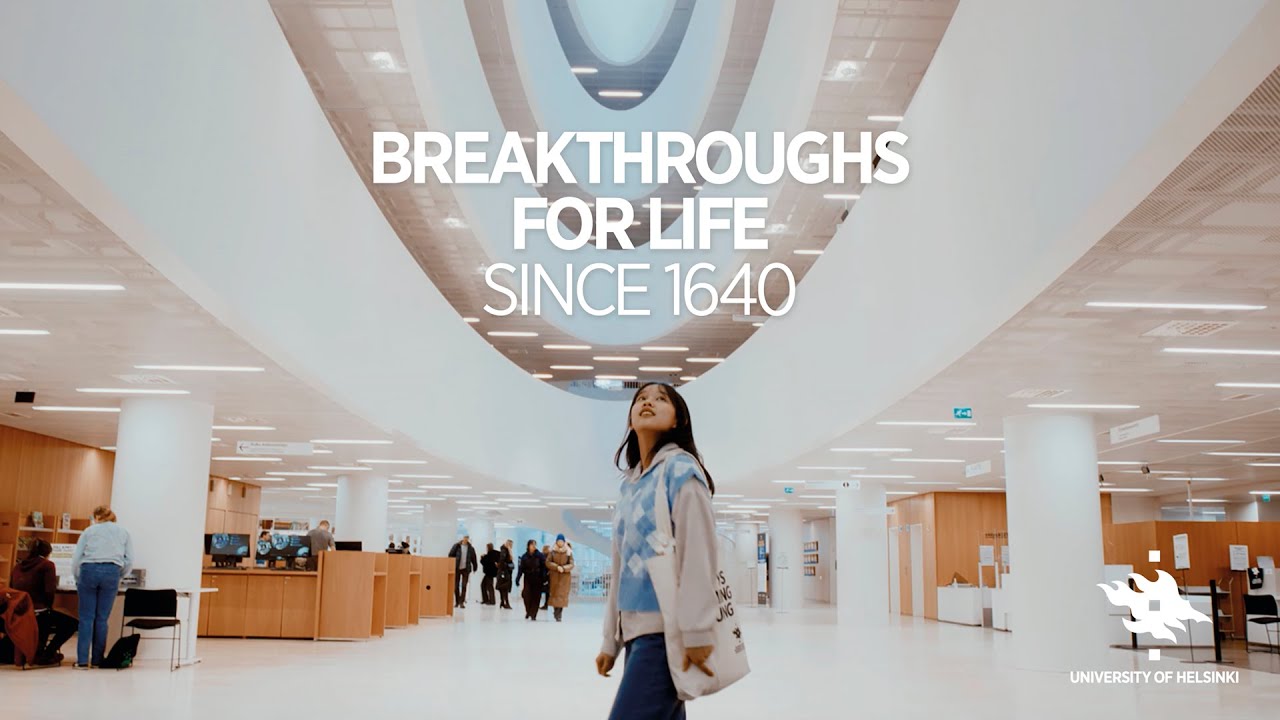
The City Centre Campus has two learning centres intended for independent work: Aleksandria and Minerva. Both centres provide space for individual studying as well as group work. In addition, Aleksandria has more than 300 computers, some of which are reserved for quick use. If you wish to access Aleksandria outside the official opening hours, you can apply for a night access key. All attending students of the University of Helsinki can apply for the key.
Each campus has its own campus library with a collection of literature relating to the degree programmes taught on each campus. The libraries have quiet spaces for work, and some offer group work spaces that can be reserved. For more information about the libraries, please click here. You can also visit the website of the Helsinki University Library.
Campus libraries
• City Centre Campus: Helsinki University Main Library, Kaisa House, Fabianinkatu 30
• Kumpula Campus: Kumpula Campus Library, Gustaf Hällströmin katu 2
• Meilahti Campus: Meilahti Campus Library Terkko Health Hub, Haartmaninkatu 4
• Viikki Campus: Viikki Campus Library, Viikinkaari 11 a
Most of the library facilities and learning centres are wheelchair accessible. Check the opening hours from the library website and use the floor maps to discover the facilities and services available at each location.
You can also explore the National Library, Finland’s oldest and most extensive academic library and a part of the University of Helsinki.
How can you find academic articles and literature in your field? Use LibraryGuides to find discipline-specific sources.
Think corner
Located on the City Centre Campus, Think Corner is an event space and a meeting place for everyone. At Think Corner on Yliopistonkatu, in the very heart of the City Centre Campus, you are among the latest in top research. Think Corner offers events, a lively programme and facilities for both individual and group work.
The work spaces are located on three levels, and are offered on a “first come, first served” principle. On the street level is Think Corner Stage, where experts, researchers, influencers and the audience can probe topical issues together. Tiedekulma Café operates in the same space, offering drinks, lunches and catering.
Work spaces
The IT Centre offers work spaces with computers for all members of the University community on the City Centre, Kumpula and Viikki Campuses. These include large general facilities, classrooms and terminals for quick use.
Student life
It's easy to enjoy student life in Helsinki. As a student at the University of Helsinki, you have endless possibilities for extracurricular activities. You also get numerous benefits and services that make your life easier and more fun.Why not ask our international students yourself? Chat with our students to find out how they experience life in Helsinki, the capital of Finland.Cost of Living
Accommodation
Food
Transport
Utilities
Tuition fees
Domestic
International
Bachelor's programme: The Bachelor’s programme in Science carries tuition fees for students coming from outside the EU/EEA. The yearly fee for the programme is 13 000 euros.
Master's programmes: One academic year in the University of Helsinki’s International Master’s programmes costs between 13 000 and 18 000 euros for students coming from outside the EU/EEA.
The fees are only charged for English-language programmes, not programmes offered in Finnish or Swedish.
More information on the tuition fees
Check here to see if you are required to pay tuition fees
Our scholarship programme is for students who are applying to the University of Helsinki. These scholarships are intended for excellent students from outside the EU/EEA who want to do a Master’s programme at the University of Helsinki. When applying to an International Master’s Programme, you can at the same time apply for a scholarship on the same application form. There are no separate scholarship application forms.
Scholarships
Selecting the right scholarship can be a daunting process. With countless options available, students often find themselves overwhelmed and confused. The decision can be especially stressful for those facing financial constraints or pursuing specific academic or career goals.
To help students navigate this challenging process, we recommend the following articles:

How to get a full scholarship
Looking for a fully-funded scholarship to see you into university? Find out how to boost your chances of getting one.
Scholarships to study abroad
Find scholarships to study abroad with our lists of international scholarships – categorized by country, by subject, and by type of student.
Scholarship Applications: Frequently Asked Questions
Get answers to all your questions about scholarship applications, including tips on how to find scholarships and chances of success.
Employability
Career Services monitors the placement of graduates of the University of Helsinki with regular career placement reports. The monitoring takes place every year, five years after the completion of one’s degree for master’s degrees, and two to three years for doctoral degrees.
Rankings & Ratings
University of Helsinki is one of the top Public universities in Helsinki, Finland. It is ranked #=116 in QS World University Rankings 2026.
QS World University Rankings
QS WUR Ranking By Subject
QS Sustainability Ranking
Europe University Rankings - Northern Europe
QS World University Rankings
QS WUR Ranking By Subject
QS Sustainability Ranking
Europe University Rankings - Northern Europe
QS World University Rankings
University of Helsinki
Videos & media
Videos & media
Campus locations
open the map
Frequently Asked Questions
You can apply to a Master’s programme even if you are in the middle of the last year of your undergraduate university studies. Please see question "I have not yet graduated. Can I still apply?" for more information.
When applying to degree programmes conducted in English at any level, you must meet the English language requirements. Please see question "How can I prove my English language skills?" for further information on the language requirements.
Please note that the language requirements may vary according to which degree programme you are applying to.
Bachelor's programme: When applying to the Bachelor's programme in Science, you must prove your English language skills. Please check the instructions for proving your English language skills for the Bachelor's programme.
Master’s programmes: When applying to Master’s programmes in English, you must prove your English language skills. Please check the instructions for proving your English language skills for the Master's programmes.
Bachelor's programme: You can apply to the Bachelor's programme in Science even if you graduate after the application period. Please see further information regarding applying to the Bachelor's programme in Science here
Master's programmes: You can apply if you have not graduated before the application period. In such case, you do not need to submit your degree certificate during the application period. If you get accepted to a Master’s programme, your admission will be conditional and you will receive instructions on how to submit your final degree certificate.
Bachelor’s programme: University of Helsinki offers two Bachelor’s programme in English, Bachelor's programme in Science and Liberal Arts and Sciences. In the other undergraduate degree programmes, the language of teaching is Finnish and/or Swedish.
Master’s programmes: At the University of Helsinki, you can choose from over 30 International Master’s Programmes in English.
You can find all our degree programmes in the degree finder.