





Sponsored by SRM Institute of Science & Technology
Computer science engineering and electrical and electronics engineering are two of the most popular engineering programmes.
Both programmes offer excellent career prospects, and require students to use logical, critical thinking and analytical skills regularly. It can therefore be hard to know which one would be best for you.
To make your decision easier, we’ve outlined the key differences between the two degrees.
What will you study?

What will you study in computer science engineering degree?
A computer science engineering degree will provide you with a thorough knowledge of computer systems. You'll get the chance to learn general computer science knowledge while also developing practical software engineering skills.
Throughout your degree, you'll acquire practical mathematical, scientific and computer science knowledge that will help you identify and solve computer science and engineering problems in areas related to the design, development, testing and maintenance of computer systems.
Some key modules you might expect to study in a computer science engineering degree may include:
-
Data structures and algorithms
-
Design and programming
-
Computer organisation and architecture
-
Design and analysis of algorithm
-
Operating systems
-
Software engineering and project management
-
Programming practice
The B.Tech in Computer Science Engineering at SRM Institute of Science and Technology is a broad and flexible degree programme. It is taught by industry experts and academics, with the aim of preparing students to work in a wide range of roles in the industry.
What will you study in an electrical and electronics engineering degree?
Electrical engineering and electronics engineering are often talked about interchangeably, but they do have their differences. Electrical engineering concerns the generation, distribution and electricity on a large scale, while electronic engineering is about the components and systems that make electronic devices work.
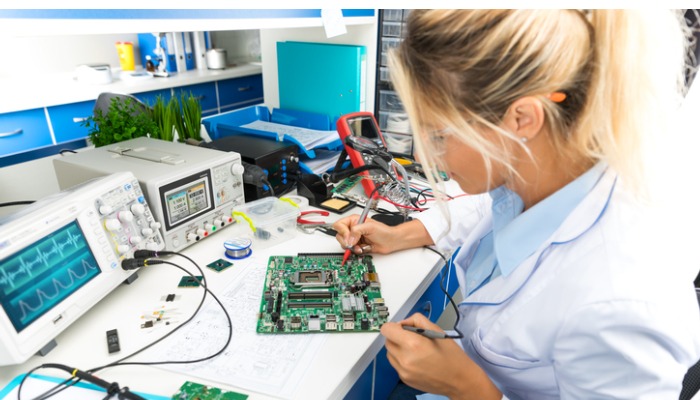
Throughout your electrical and electronics engineering degree you will learn how to make, design, test, build and repair electronic components for use in a variety of different industries. As electrical engineering is generally more teamwork-based than computer science, there is also a focus on building communication skills.
Modules you may study in an electrical and electronics engineering degree include:
-
Analysis of electric circuits
-
Electromatic theory
-
Digital system design
-
Electrical machines
-
Analog electronics
-
Electrical and electronics measurements and instrumentations
-
Generation, transmission and distribution
At SRM Institute of Science & Technology, the B.Tech in electrical and electronics engineering motivates students to become better practicing engineers who use the latest developments in electrical engineering to solve problems.
The school has partnerships with leading industry and government organisations such as State Electricity Board, Larsen & Toubro, Siemens, Bharat Heavy Electricals Ltd and Atomic Research Centre. This gives students the opportunity to build valuable connections during their studies.











Get closer to your dream programme
Your consent preferences have been set.
Time to start exploring.
Your account has been removed.
You can still browse the site or sign up again once you have parental consent.
Get closer to your dream programme