






# 1201-1400QS World University Rankings

96Undergrad & Postgrad Programmes

5 % International students


About Tashkent State University of Economics
Based on Presidential Decree No. 62, dated February 7, 2024, the University was reorganized through the merger with the Tashkent Financial Institute and the Fiscal Institute. The University operates under the Ministry of Higher Education, Science, and Innovation of the Republic of Uzbekistan and has academic, organizational, and financial autonomy.
The strategic vision of the University for the period 2025–2030 is to transform into a multicultural, international academic hub with the highest intellectual potential, playing a pivotal role in enhancing the global competitiveness of Uzbekistan’s national economy. The future governance model of TSUE is grounded in the best practices of the world’s leading universities and is built on the “6i Model,” which includes the following pillars: Internationalization, Interdisciplinarity, Intersectoral Connectivity, Innovation, Interaction, and Inclusiveness. This development trajectory is aligned with the “University 4.0” concept.
Academic Structure and Educational Capacity Relying on its decades-long institutional experience and aligned with its mission across the social, economic, and innovation domains, TSUE has established a comprehensive and effective management structure. As of September 1, 2024, the University consists of: 12 faculties, 11 international joint degree programs, filial located in Samarkand, 2 regional faculties based in Andijan and To‘rtko‘l, 7 technical colleges, and 45 academic departments. In addition, 12 faculty units have been integrated into various ministries and governmental agencies to support practice-oriented higher education.
TSUE is recognized as a leading higher education institution in training, retraining, and advancing specialists and researchers in disciplines under the academic clusters of Social Sciences and Management, Computer Science, and Arts and Humanities, particularly in economic domains. Based on the requests and needs of employers, the University offers: 14 bachelor's programs, 42 master’s degree specializations, and 19 doctoral (PhD/DSc) specialties.
As of September 1, 2024, TSUE’s academic staff includes 1,080 teaching professionals, of whom: 1 is an academician, 151 hold the title of Doctor of Science and Professor, 367 are Candidates of Science and Associate Professors, 5 faculty members have defended dissertations at top 1000 QS or THE-ranked global universities.
As of May 1, 2025, the University’s research capacity stands at 60.8%. Over the past five years, the academic staff, doctoral candidates, and independent researchers of the University have published 2013 articles in prestigious international journals indexed in Scopus and Web of Science.
Innovation Ecosystem and Research Infrastructure To enhance its modern research environment and promote commercialization of academic outcomes, TSUE has established several cutting-edge innovation and research centers, including: University 4.0 Transformation Center
This center was established to systematize activities in the following areas: Commercialization of educational and scientific research outcomes, financial support for student startup projects, Effective implementation of spin-off initiatives, and Development of an innovation-driven academic ecosystem.
New Climate Innovation Center. In response to the global and national economic demand for sustainable development, TSUE founded the New Climate Innovation Center to advance scientific research in the field of green economy. The center's primary mission includes: Supporting Uzbekistan's positioning in international indices such as the Global Green Economy Index (GGEI) and Green Growth Index (GGI), Promoting strategic research aligned with the “Green Economy” concept. Digital Economy Incubation Center.
This center was established in collaboration with IT-PARK Uzbekistan and is designed to: Provide a supportive ecosystem for gifted youth and researchers, Facilitate the development and launch of student startups, Support the creation and deployment of innovative IT products, deliver technical assistance and organize workshops and training, Internationalization of Curriculum and Joint Programs. Since 2021, TSUE has fully transitioned its undergraduate and graduate programs to a modular credit-based education system in accordance with European Credit Transfer and Accumulation System (ECTS) standards.
Joint International Degree Programs. TSUE has established seven active joint educational programs with leading global institutions, including:
- The London School of Economics and Political Science (UK)
- IMC University of Applied Sciences Krems (Austria)
- Indonesia University of Education (Indonesia)
- M. Ryskulbekov Kyrgyz Economic University (Kyrgyzstan)
- Ural State University of Economics (Russia)
- National Research Nuclear University (Russia)
- Ufa State Petroleum Technological University (Russia)
Distinguished Alumni and Graduate Impact. Over its 90-year history, TSUE has produced thousands of influential alumni who have significantly contributed to various sectors of Uzbekistan’s and Central Asia’s economies. Among its most prominent graduates are: Islam Karimov – First President of the Republic of Uzbekistan, Murad Sharifkhojaev – First Chairman of the Senate of the Oliy Majlis (Parliament), Numerous senators and deputies of the Legislative Chamber, Five Deputy Prime Ministers of Uzbekistan, Ministers and Deputy Ministers of the Cabinet of Ministers, Chairmen of the Central Bank and major commercial banks. International Cooperation and Academic Mobility. TSUE maintains a wide network of global academic partnerships.
As of 2023, the University has signed active memorandums of cooperation with over 160 prestigious universities worldwide. Students from over 26 different nationalities are currently enrolled at the University. TSUE hosts a total of 1,391 international students from 17 countries, participating in full-time undergraduate, graduate, exchange, and seasonal school programs. The University actively participates in numerous global grant and mobility programs, including:
- Erasmus+
- Jean Monnet
- Horizon Europe
- Fulbright
- JICA
- FEP and others.
- QS Asia University Rankings 2024: #357
- QS Central Asia: #23
- QS Uzbekistan: #3
- QS Sustainability (WUR 2024): 1161–1200 band
- QS by Subject – Economics & Econometrics (2025): # 401–450
- QS Stars Rating (2025): 5 Stars
- THE Impact Rankings 2024: # 801–1000 global band
- THE Impact Rankings 2025: # 401–600 global band
- GreenMetric WUR: # Top 300 globally.
About Tashkent State University of Economics
Based on Presidential Decree No. 62, dated February 7, 2024, the University was reorganized through the merger with the Tashkent Financial Institute and the Fiscal Institute. The University operates under the Ministry of Higher Education, Science, and Innovation of the Republic of Uzbekistan and has academic, organizational, and financial autonomy.
The strategic vision of the University for the period 2025–2030 is to transform into a multicultural, international academic hub with the highest intellectual potential, playing a pivotal role in enhancing the global competitiveness of Uzbekistan’s national economy. The future governance model of TSUE is grounded in the best practices of the world’s leading universities and is built on the “6i Model,” which includes the following pillars: Internationalization, Interdisciplinarity, Intersectoral Connectivity, Innovation, Interaction, and Inclusiveness. This development trajectory is aligned with the “University 4.0” concept.
Academic Structure and Educational Capacity Relying on its decades-long institutional experience and aligned with its mission across the social, economic, and innovation domains, TSUE has established a comprehensive and effective management structure. As of September 1, 2024, the University consists of: 12 faculties, 11 international joint degree programs, filial located in Samarkand, 2 regional faculties based in Andijan and To‘rtko‘l, 7 technical colleges, and 45 academic departments. In addition, 12 faculty units have been integrated into various ministries and governmental agencies to support practice-oriented higher education.
TSUE is recognized as a leading higher education institution in training, retraining, and advancing specialists and researchers in disciplines under the academic clusters of Social Sciences and Management, Computer Science, and Arts and Humanities, particularly in economic domains. Based on the requests and needs of employers, the University offers: 14 bachelor's programs, 42 master’s degree specializations, and 19 doctoral (PhD/DSc) specialties.
As of September 1, 2024, TSUE’s academic staff includes 1,080 teaching professionals, of whom: 1 is an academician, 151 hold the title of Doctor of Science and Professor, 367 are Candidates of Science and Associate Professors, 5 faculty members have defended dissertations at top 1000 QS or THE-ranked global universities.
As of May 1, 2025, the University’s research capacity stands at 60.8%. Over the past five years, the academic staff, doctoral candidates, and independent researchers of the University have published 2013 articles in prestigious international journals indexed in Scopus and Web of Science.
Innovation Ecosystem and Research Infrastructure To enhance its modern research environment and promote commercialization of academic outcomes, TSUE has established several cutting-edge innovation and research centers, including: University 4.0 Transformation Center
This center was established to systematize activities in the following areas: Commercialization of educational and scientific research outcomes, financial support for student startup projects, Effective implementation of spin-off initiatives, and Development of an innovation-driven academic ecosystem.
New Climate Innovation Center. In response to the global and national economic demand for sustainable development, TSUE founded the New Climate Innovation Center to advance scientific research in the field of green economy. The center's primary mission includes: Supporting Uzbekistan's positioning in international indices such as the Global Green Economy Index (GGEI) and Green Growth Index (GGI), Promoting strategic research aligned with the “Green Economy” concept. Digital Economy Incubation Center.
This center was established in collaboration with IT-PARK Uzbekistan and is designed to: Provide a supportive ecosystem for gifted youth and researchers, Facilitate the development and launch of student startups, Support the creation and deployment of innovative IT products, deliver technical assistance and organize workshops and training, Internationalization of Curriculum and Joint Programs. Since 2021, TSUE has fully transitioned its undergraduate and graduate programs to a modular credit-based education system in accordance with European Credit Transfer and Accumulation System (ECTS) standards.
Joint International Degree Programs. TSUE has established seven active joint educational programs with leading global institutions, including:
- The London School of Economics and Political Science (UK)
- IMC University of Applied Sciences Krems (Austria)
- Indonesia University of Education (Indonesia)
- M. Ryskulbekov Kyrgyz Economic University (Kyrgyzstan)
- Ural State University of Economics (Russia)
- National Research Nuclear University (Russia)
- Ufa State Petroleum Technological University (Russia)
Distinguished Alumni and Graduate Impact. Over its 90-year history, TSUE has produced thousands of influential alumni who have significantly contributed to various sectors of Uzbekistan’s and Central Asia’s economies. Among its most prominent graduates are: Islam Karimov – First President of the Republic of Uzbekistan, Murad Sharifkhojaev – First Chairman of the Senate of the Oliy Majlis (Parliament), Numerous senators and deputies of the Legislative Chamber, Five Deputy Prime Ministers of Uzbekistan, Ministers and Deputy Ministers of the Cabinet of Ministers, Chairmen of the Central Bank and major commercial banks. International Cooperation and Academic Mobility. TSUE maintains a wide network of global academic partnerships.
As of 2023, the University has signed active memorandums of cooperation with over 160 prestigious universities worldwide. Students from over 26 different nationalities are currently enrolled at the University. TSUE hosts a total of 1,391 international students from 17 countries, participating in full-time undergraduate, graduate, exchange, and seasonal school programs. The University actively participates in numerous global grant and mobility programs, including:
- Erasmus+
- Jean Monnet
- Horizon Europe
- Fulbright
- JICA
- FEP and others.
- QS Asia University Rankings 2024: #357
- QS Central Asia: #23
- QS Uzbekistan: #3
- QS Sustainability (WUR 2024): 1161–1200 band
- QS by Subject – Economics & Econometrics (2025): # 401–450
- QS Stars Rating (2025): 5 Stars
- THE Impact Rankings 2024: # 801–1000 global band
- THE Impact Rankings 2025: # 401–600 global band
- GreenMetric WUR: # Top 300 globally.
Brochures
Available programmes

University information
Application windows & key dates:
1. Online registration:
- Domestic (Uzbek citizens): 1 – 30 June 2025 on my.gov.uz;
- International applicants: Rolling: 1 March – 31 August 2025 on https://tsue.uz/admission
2. State entrance tests:
- Domestic (Uzbek citizens ): Early August 2025;
- International applicants: June- August 2025.
- Domestic (Uzbek citizens ): Within 15 days after results are released ( https://tsue.uz/en/page/admission-2025 );
- International applicants: Direct in the portal.
- Domestic (Uzbek citizens ): 10 September 2025;
- International applicants: Direct in the portal.
- Domestic (Uzbek citizens ): 10 September 2025;
- International applicants: Direct in the portal.
- Domestic (Uzbek citizens): —;
- International applicants: Instant support letter on request.
- Domestic (Uzbek citizens): By 25 September 2025;
- International applicants: By 25 September 2025.
Entry requirements:
1. Bachelor’s :
- Academic background: Completed secondary / vocational school with ≥ 60 points in the State Test (Uzbek citizens) or a high-school diploma with GPA ≥ 3.0 / 80 % (international);
- Language: IELTS 5.5 / TOEFL iBT 60 (programmes taught in English); B2 CEFR for Uzbek- or Russian-medium tracks;
- Other: Notarized translations of all certificates for foreign applicants ( https://tsue.uz/en/admission ) .
- Academic background : Bachelor’s degree in a relevant field; min GPA 3.0 / 75 %;
- Language: IELTS 5.5 / TOEFL iBT 70
- Other: Motivation letter; two references.
- Academic background: Master’s or Specialist diploma; research proposal;
- Language: IELTS 5.5 / TOEFL iBT 70
- Other: Preliminary approval from intended supervisor.
The Cabinet of Ministers republic of Uzbekistan allocates an annual state-funded quota for each major; for 2024/25 TSUE received 2420 bachelor seats (1 120 state-funded, 1 300 fee-paying) and 610 master seats. Updated 2025 figures will be posted on the admission–2025 page as soon as they are promulgated. Competitive scores in 2024 ranged from 68 points (Econometrics) to 118 points (International Economics); applicants should regard these as indicative cut-offs.
General
Bachelor
Master
Sports & recreation- A dedicated sports quarter behind the main academic blocks contains five outdoor arenas—an all-weather football pitch, a 400-seat mini-stadium, and separate volleyball, badminton and basketball courts—plus an indoor fitness complex with cardio and free-weight zones. Qualified coaches run after-class programmers in tennis, futsal, gymnastics and aerobics, while the Sports Medicine Unit provides baseline health checks for every scholarship athlete (https://tsue.uz/en/page/sport-facilities).
Library & academic support- The four-store Information-Resource Centre (IRC) houses Central Asia’s largest economics collection, collaborative reading rooms, Bloomberg terminals and a digitization studio. For course texts and stationery the on-site Bookstore doubles as an “ideas hub” that hosts author talks, book swaps and themed displays during Global Money Week and similar events ( https://www.unipage.net/en/21873/tashkent_state_university_of_economics ) (https://tsue.uz/en/page/bookstore).
All lecture rooms meet 4th-generation multimedia standards—HD laser projection, smart boards and hybrid-teaching cameras—and each faculty hosts sponsored Training & Simulation Centers run jointly with leading commercial banks and corporations. These “Smart Classrooms” allow students to practise real-time trading, ERP scenarios and data-analytics cases on industry software.
Dining- Three subsidized cafeterias (600 seats) serve hot meals from 08:00-19:00. Menus always include halal, vegetarian and low-salt options, cash-free payment and free filtered water. Interiors follow a “third-space” design with USB-power, soft seating and campus Wi-Fi so that students can eat and study in the same venue (https://tsue.uz/en/page/cafeterias).
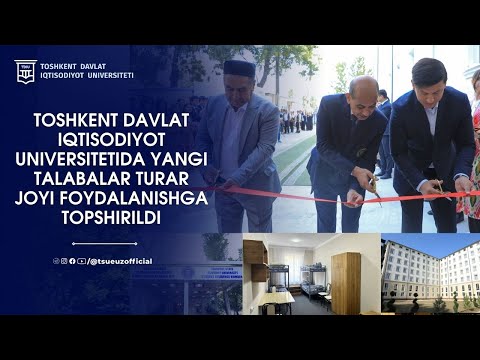
Accommodation- TSUE operates three residence halls providing 1 456 beds. Dormitory 1 (620 beds) is reserved for first-year undergraduates; Dormitories 2 & 3 house senior and international students and include family rooms and fully accessible units. All halls offer 24-hour security, resident tutors, self-service laundries, communal kitchens and high-speed internet (https://tsue.uz/en/page/dormitory).
Health & well-being- Student welfare is anchored by the Abu Ali Ibn Sina Health Support Service, an on-campus clinic staffed by physicians, nurses and a psychologist. It provides first aid, vaccination drives, sexual-health advice, stress-management workshops and fast-track referrals to partner hospitals. Emergency cover is available 24/7 and routine appointments can be booked online (https://tsue.uz/en/page/health-support-service).
Accessibility & inclusion- In line with Uzbekistan’s national EDI strategy, TSUE has retro-fitted all buildings with ramps, elevators, tactile paving and accessible wash-rooms, and supplies Braille signage, screen-reader software and induction loops. A dedicated Support Centre for Minority Groups coordinates mentors, peer buddies and targeted scholarships (https://conference.wiut.uz/images/documents/Eng_Inclusive_University_Good_Practice_Guide_13022024p.pdf) (https://tsue.uz/en/contests).
Sustainability & “Green Campus”- Campus landscaping is continually enriched to promote local flora and fauna, and all new planting follows a water-efficient xeriscape plan. A phased roll-out of rooftop solar arrays aims to cover 50 % of the University’s electricity demand by the end of 2025. Classrooms are being fitted with motion-sensor LED lighting, and all water taps are being converted to sensor-activated units to cut consumption. Bike-share docks and e-scooter charging points further reduce car use.
Social & community spaces- “Social Rooms” on every academic floor provide microwaves, lockers and lounge furniture for informal gatherings, while multi-purpose halls host debates, TEDx events and cultural nights. Outdoor Wi-Fi gardens and a rooftop terrace overlooking the Ankhor Canal extend study space during spring and autumn (https://tsue.uz/page/social-rooms).
Campus services (selected)
- 24-hour security and CCTV at all gates
- Career Centre offering weekly employer drop-ins, mock interviews and a start-up incubator
- International Office that processes visas, migration cards and insurance within 72 hours
- On-site banking, ATMs and a post office in the main atrium
Student life
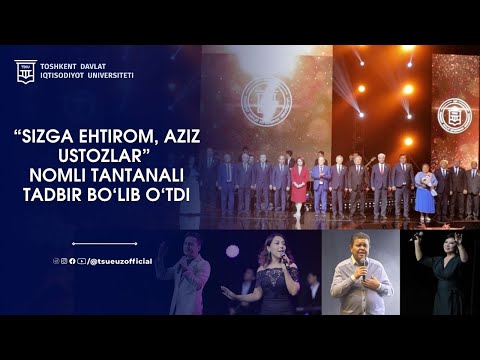
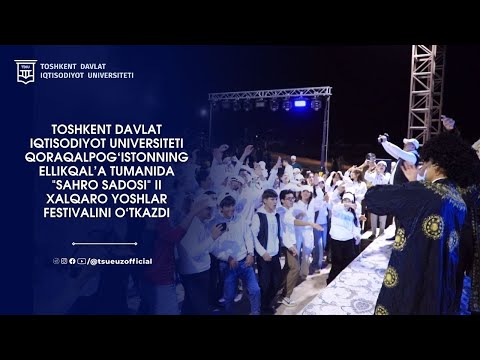
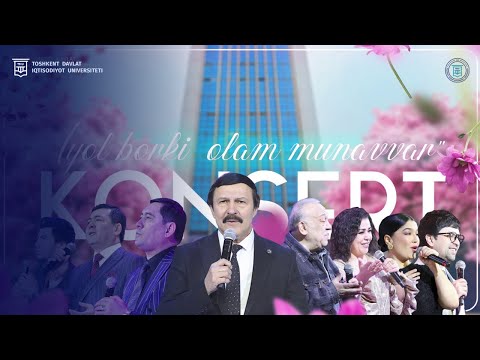
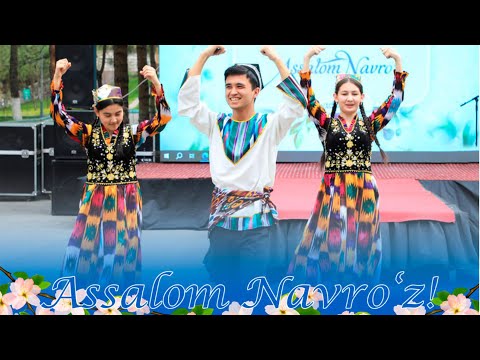
Tashkent State University of Economics (TSUE) delivers an active, deliberately inclusive student experience that balances academic rigor with extensive cultural, sporting and social opportunities. Every initiative on campus is overseen by the Student Union and the Department for Social Affairs, whose joint charter guarantees that events are bilingual (Uzbek / Russian) with simultaneous English support, physically accessible and low-cost or free to attend.Vibrant calendar of events- More than 150 date-based activities punctuate the academic year. Social highlights include Teacher’s Day, International Women’s Day, the campus Comedy Show and the spring Navruz festival, each drawing 1 000+ participants to the main square for concerts, food fairs and student-run pop-up markets (https://tsue.uz/en/page/social-life). Intellectual fixtures such as the Zakovat and Brain quiz-clubs, thematic workshops and case competitions are scheduled weekly, ensuring that extracurricular learning remains continuous rather than episodic.
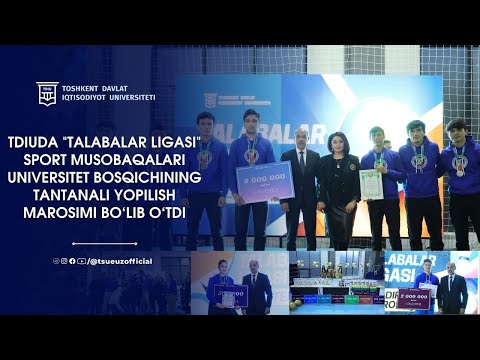
Clubs, teams and competitions- Under the “One Student—One Club” policy every first-year is matched with at least one registered society from a list that spans volleyball, swimming, tennis, chess, fitness, judo, arm-wrestling and ping-pong through to debating, photography and fintech coding groups (https://tsue.uz/en/page/students-teams). Competitive sport is anchored by the annual Rector’s Cup, a month-long tournament whose 2025 edition involved 46 teams across eight disciplines and culminated in a televised awards ceremony in June 2025 (https://tsue.uz/en/news/toshkent-davlat-iqtisodiyot-universitetida-rektor-kubogi-sport-musobaqalarining-yakuniy-bosqichi-va-taqdirlash-marosimi-bolib-otdi). Winning squads gain priority access to the University’s international exchange roster for the following semester.
Living-learning communities- TSUE’s three residence halls are programmed around thematic “floors”: Entrepreneurship, Languages & Cultures, Sustainability, and Health. Resident tutors organise floor-specific masterclasses (e.g., start-up pitch nights on the Entrepreneurship floor) and coordinate weekend service trips with local NGOs. Communal Social Rooms on every level—equipped with kitchenettes, sofas, print stations and video-game consoles—act as informal hubs where domestic and international students can mix outside formal study hours (https://tsue.uz/page/social-rooms).
Inclusion and personal support- A dedicated Support Centre for Minority Groups supplies peer mentors, legal counselling and scholarship guidance to women in STEM, first-generation students and ethnic-minority groups. All buildings incorporate wheelchair ramps, Braille signage and induction loops; lecture recordings are automatically captioned in Uzbek and English. For physical and mental health the on-site Abu Ali ibn Sina Health Support Service offers 24/7 first aid, vaccination drives, free mental-health counselling and reproductive-health advice (https://tsue.uz/en/page/health-support-service).
Food, retail and “third-spaces”- Three campus cafeterias supply subsidized, halal-certified menus and “grab-and-go” counters until 19:00; extended hours operate during exam weeks. A student-run Bookstore Café doubles as an ideas lab hosting author talks and second-hand textbook swaps, reinforcing the University’s sustainability agenda.
Community engagement & global outlook- TSUE students log a combined 20 000+ volunteer hours each year through initiatives ranging from weekend English clubs in local schools to pro-bono tax-filing clinics for small businesses. International exposure is supported by language tandems, Model UN simulations and 60+ exchange slots under Erasmus+, Mevlana and CAMPUS Asia frameworks.
Digital & physical safety- The campus is fully CCTV-monitored, guarded 24 hours and smoke-free. A real-time mobile app (“TSUE Life”) pushes event reminders, room-booking options and emergency alerts while letting students rate every activity for future funding decisions.
Sustainability in daily life- Student Life aligns with TSUE’s Green Campus roadmap: waste-sorting bins are colour-coded across all common areas; bike-share docks and e-scooter chargers sit at each gate; dormitories run “Eco-Floor” energy-saving contests that have cut electricity use by 12 % since 2023.
Cost of Living
Housing and utilities :
- On-campus: a dormitory bed—including heat, electricity, water and Wi-Fi—costs roughly UZS 250 000 to 400 000 per month (US $20–32).
- Off-campus: a shared, two- or three-bedroom apartment in the city center averages US $180–230 in rent, plus about US $40 for utilities. TSUE operates three residence halls with 1 456 beds arranged in two- to four-person rooms.
- Living in the halls and eating mainly in the TSUE cafeterias will run US $120–160 a month; set meals start at about UZS 20 000 (US $1.60).
- Students who cook at home and dine out occasionally should budget US $150–220 if they share a flat. (Source: numbeo.com).
- A student monthly pass for the metro and municipal buses costs about US $12. The standard cash fare is UZS 1 700, and taxis charge roughly UZS 6 000 per kilometer.
- Allow around US $30 per semester for stationery and any print texts you cannot access through the Information-Resource Centre or its Bloomberg terminals.
- Students in the dorms can buy a 10 GB data bundle for about US $6 a month. Off-campus users usually spend US $10–12 because of higher data allowances or fibre-optic plans.
- Basic medical care at the on-site Abu Ali ibn Sina clinic is free; use of the campus fitness center is about US $20 per month. Rates are similar for off-campus students who join the same gym.
- Dorm residents who keep entertainment modest—infrequent cafés, the occasional cinema ticket—typically spend US $40–60 monthly. Students living in town and socializing more actively should expect US $60–90. A cinema ticket or a café meal averages UZS 60 000. (Source: numbeo.com)
- Minimal (dormitory + self-catering): US $350–400.
- Comfort (shared flat + mixed dining): US $550–650.
- Private studio lifestyle: US $800 or more.
All figures use the May 2025 exchange rate of US $1 ≈ UZS 12 700 and draw on Numbeo’s June 2025 survey and Wise’s cost tracker for Tashkent.
Dorm fees follow national guidelines; exact figure confirmed each August by TSUE’s Student Housing Centre.
Indicative monthly budgets :
- Minimal (dormitory, self-catering) → US $350–400.
- Comfort (shared apartment, mix of cooking & dining out) → US $550–650.
- Private studio lifestyle → US $800+ .
- Paying dorm fees annually to avoid in-year indexation.
- Using the campus cafeterias (set menus 60 % below city-center prices).
- Claiming the 50 % student discount on Uzbekistan Railways tickets for regional travel.
- Joining TSUE’s book-swap programme and making full use of the digital library before buying texts.
Accommodation
Food
Transport
Utilities
Tuition fees
Domestic
Domestic (Out of State)
International
State-funded contracts- Every year the Ministry of Higher Education assigns tuition-free “budget” places to TSUE; recipients pay no fees and receive a state stipend whose size and payment rules are set in a government resolution on student benefits ( https://lex.uz/uz/docs/6115526?ONDATE=23.10.2021 ). Tuition for fee-paying places in 2024/25 ranges from UZS 10–16 million (≈ US $900–1200) depending on level and major ( https://tsue.uz/en/page/contract-prices-2024 ). Top-ranked entrants also compete for Presidential-series scholarships, which increase the stipend by 50 % and guarantee dormitory accommodation.
TSUE institutional awards- The University itself offers four permanent schemes. The Rector’s Merit Award halves tuition for applicants in the top five per cent of the entrance ranking or those holding IELTS 7.0+. The Women-in-STEM Grant lowers fees by 30 % for forty female entrants to economics or IT and grew out of TSUE’s campus STEM-program initiative (https://tsue.uz/news/kraudfanding-platformasi-va-stem-dasturi). The Green Campus Scholarship waives 25 % of tuition and adds a six-million-UZS stipend for sustainability projects, while the Path-to-Scholarship Fund can remove up to 100 % of fees for low-income families. All four awards are renewable so long as students keep a GPA of 3.0, complete twenty hours of community service and remain in good standing.
Corporate sponsorships- Banks and corporates finance additional aid. Turonbank Scholarship pays a two-million-UZS monthly stipend for six months to 100 awardees drawn from all degree levels (https://tsue.uz/en/news/tdiu-talabalari-turonbank-stipendiyasini-qolga-kiritishdi). Asakabank offers a one-off ten-million-UZS grant to final-year students, and UZUM Tech funds full master’s tuition plus an internship for up to fifteen data-science candidates each year. Most such awards require six to eighteen months of service at the donor institution after graduation.
International mobility & external grants- Outbound students retain their TSUE funding while enjoying tuition waivers and monthly stipends from Erasmus+, CAMPUS Asia or DAAD; Erasmus+ typically pays €800–1 000 per month plus partial airfare. Two hundred-plus TSUE students secured such packages in 2024, all processed through the International Grants Unit.
Graduate assistantships & research fellowships- Master’s teaching assistants receive a 25 % fee waiver and earn about 1.2 million UZS a month for ten hours of work weekly. PhD research assistants obtain full tuition cover plus a 3.5-million-UZS stipend, financed from external grants. Agencies such as KOICA and the ADB also provide monthly allowances of US $300–500 to researchers attached to donor-funded projects.
State-backed education loans- Uzbek citizens may finance any remaining tuition through a Youth-Support-Fund-insured education loan offered by Xalq Bank, NBU and Ipak Yo‘li. Loans carry an interest rate equal to the Central-Bank base minus four percentage points (about 14 % in 2025), run for up to seven years and feature a grace period covering the study period plus six months after graduation ([uzdaily.uz][5]). Up to 75 % of the bank’s risk is guaranteed by the state.
On-campus earnings- TSUE employs 120–150 students each semester in the library, IT help-desk and peer-tutoring programmes. Pay averages UZS 5 000 000 per month (≈ US $400) and does not reduce scholarship eligibility.
Fee management & inflation protection- Tuition at Uzbekistan’s public universities rose by an average of 15 % for 2024/25, yet TSUE caps any subsequent increase for each cohort at “consumer-price index plus two points (https://www.gazeta.uz/en/2024/07/29/contracts/). The CPI itself stood at 8.7 % year-on-year in May 2025 (https://stat.uz/img/press-reliz-ipts-za-maj2025-eng_p98859.pdf). Students can further reduce costs through a ten-per-cent sibling discount, a five-per-cent early-payment rebate and instalment plans (four quarterly payments for domestic students, two semester payments for internationals).
By integrating state subsidies, university waivers, corporate grants, international mobility funding and subsidized credit, TSUE builds a 360-degree finance ecosystem that lets students focus on learning rather than on financial barriers.
Scholarships
Selecting the right scholarship can be a daunting process. With countless options available, students often find themselves overwhelmed and confused. The decision can be especially stressful for those facing financial constraints or pursuing specific academic or career goals.
To help students navigate this challenging process, we recommend the following articles:

How to get a full scholarship
Looking for a fully-funded scholarship to see you into university? Find out how to boost your chances of getting one.


Scholarships to study abroad
Find scholarships to study abroad with our lists of international scholarships – categorized by country, by subject, and by type of student.


Scholarship Applications: Frequently Asked Questions
Get answers to all your questions about scholarship applications, including tips on how to find scholarships and chances of success.

Employability
Graduate outcomes:
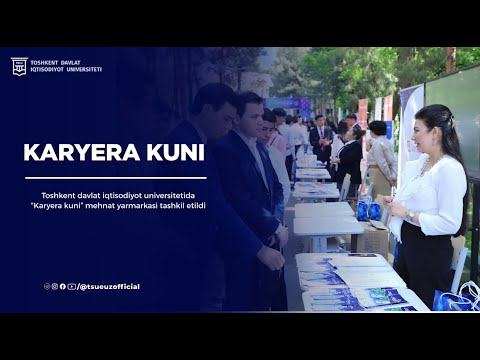
- 96.5 % employment – of the 2023/24 graduating cohort secured work or postgraduate study within six months, according to Ministry-audited data announced at TSUE’s 2024 “Career Day” ( https://tsue.uz/en/news/tdiuda-karyera-kuni-mehnat-yarmarkasi-tashkil-etildi ).
- Top sectors: banking & fintech (32 %), audit & advisory (19 %), public finance (11 %), logistics (8 %), FMCG (7 %), and IT services (6 %).
- Median starting salary for bachelor graduates in 2024: UZS 6.8 million per month (≈ US $550).
- Audit and advisory. Major recruiters include PwC, KPMG, Deloitte and EY. Typical entry positions for TSUE graduates are assurance trainee, tax analyst or deals-advisory intern.
- Banking and fintech. Partners range from the Central Bank of Uzbekistan and large commercial banks such as Turonbank, Asakabank and KapitalBank to rapidly growing fintechs like Payme and Uzum. Common starting roles are retail-banking associate, risk modeller and product manager.
- Multinationals and FMCG. International brands such as Coca-Cola İçecek, Nestlé, L’Oréal and UzAuto Motors hire TSUE students as management trainees and supply-chain analysts.
- Public sector and international financial institutions. The Ministry of Economy and Finance, the Asian Development Bank, UNDP and World Bank–funded projects recruit graduates for policy-analyst and project-coordinator posts.
- Tech and data. Employers include EPAM, resident companies of Uzbekistan’s IT Park and Yandex Go. Typical entry titles are business-data analyst and QA tester.
Integrated career-development model :
- First year – Discover. Employability Passport module (2 ECTS) introduces self-assessment, labour-market mapping and LinkedIn profile building.
- Second year – Engage. Students complete a 160-hour compulsory internship during the summer. The Career Centre guarantees a placement to every student who meets GPA > 2.5.
- Third year – Experience. Project-based learning partnered with KPMG, PwC and IT Park start-ups; students solve live cases and pitch to employers.
- Final year – Launch. Personal career coach, mock assessment centres, and direct-hire interviews during Career Day—a job fair that attracted 10 000 visitors and 170 companies in 2024 ( https://tsue.uz/en/news/tdiuda-karyera-kuni-mehnat-yarmarkasi-tashkil-etildi ).
Signature programmes :
- Rector’s Internship Fund – stipends airfare and living costs for up to 30 international internships each summer.
- Women in Finance Mentoring Circle – pairs female undergraduates with executives from Deloitte, Turonbank and the Central Bank.
- Green Economy Incubator – seed-funds student start-ups focused on clean energy and circular-economy solutions; three alumni ventures have already raised external investment.
- Civil Service Fast Track – bespoke workshops with the Civil Service Development Agency; 40 graduates entered state ministries through this route in 2024 ( https://tsue.uz/en/news/karyera-kunida-talabalar-bandligini-taminlashga-xizmat-qiluvchi-muhim-hamkorlik-kelishuvlari-imzolandi ).
Global employability- Seven joint- or dual-degree tracks—run with partners such as the London School of Economics, Missouri State University and IMC Krems—embed compulsory overseas study or practicum blocks, broadening graduates’ international career options ( https://www.timeshighereducation.com/world-university-rankings/tashkent-state-university-economics ). Exchange students also benefit from Erasmus+, Mevlana and CAMPUS Asia mobility grants managed by TSUE’s International Grants Unit.
Continuous support for alumn- The Graduate Success Office maintains a 25 000-member alumni network on Telegram and LinkedIn, circulates quarterly labour-market bulletins and offers free CPD webinars in data analytics, CFA prep and coding. Alumni can access career counselling for up to five years post-graduation.
Career-readiness metrics (2024 cohort) :
- Internship participation. Eighty-seven percent of students completed at least one formal internship before graduation.
- Assessment-centre engagement. A total of 2 150 students took part in simulated assessment centres run by the Career Centre and partner employers.
- Professional certification. Thirty-four percent of graduates left TSUE holding at least one industry credential—such as ACCA papers, CFA Level 1, Cisco networking badges or the Bloomberg Market Concepts certificate.
- Student entrepreneurship. Eighteen start-ups were legally incorporated by final-year project teams during the academic year.
- Alumni mentoring coverage. The University maintains a ratio of one alumni mentor for every seven students participating in the formal mentoring programme.
- Career Centre enquiries – +998 97 410 78 64 | [email protected]
- Job board – career.tsue.uz (24/7 access; VPN may be required outside Uzbekistan)
- Internship Desk – [email protected] (Room A-109)
- Start-up Garage – [email protected] (Tech Park Annex)
Rankings & Ratings
Tashkent State University of Economics is one of the top Public universities in Tashkent, Uzbekistan. It is ranked #1201-1400 in QS World University Rankings 2027.


QS World University Rankings
- 2026#1001-1200
- 2027#1201-1400

QS World University Rankings
- 2026#1001-1200
- 2027#1201-1400









Campus locations

open the map
Get closer to your dream programme
Your consent preferences have been set.
Time to start exploring.
Your account has been removed.
You can still browse the site or sign up again once you have parental consent.
Get closer to your dream programme