





What is environmental science?
Environmental science is a multidisciplinary subject covering everything from biology and chemistry to geography and social sciences.
Students learn to analyse the natural and human environment through many lenses, to understand the impact of human actions upon our ecosystems and to develop plans for the future.
As an environmental science student, fieldwork will be a vital aspect of your studies and you’ll gain practical experience via trips to a variety of local and potentially international locations. Students get to explore different climates, ecosystems, land formations and communities, learning to capture data and carry out tests for analysis.
If you choose to study an environmental science degree, the first stage of the programme will give you the foundational knowledge and cover the main principles of the subject.
After that, you’ll be able to choose from a selection of modules to specialise in a particular area of environmental science, or to explore further areas you’re interested in.
Why are environmental scientists important?
Environmental science is invaluable to the world – to keep our livelihoods and ecosystems in balance, to better understand changes and challenges for natural and human environments, and to create sustainable solutions for the future.
Environmental scientists work across a huge range of industries and interdisciplinary roles from research to consultancy, nature conservation and planning, even engineering and technology.
Working with a range of other experts, environmental scientists can help to educate the world on how and why things happen in our environment, and how we can play our part in shaping the future.
What jobs can I get with an environmental science degree?
Let’s look at the wide variety of careers in environmental science; from more typical roles to the less expected jobs.
Environmental science careers in research
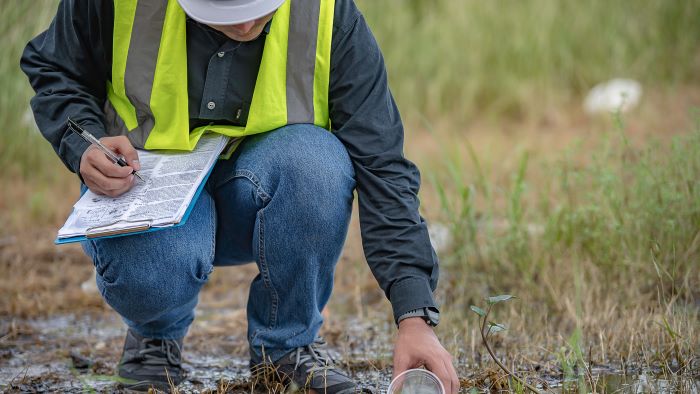
Most of your training as an environmental science student will be in analysing a variety of environments and working with data to understand environmental problems. As a researcher, you could work with an NGO or charity like Greenpeace, The Marine Conservation Society or WWF, for example.
Environmental researchers dedicate their time primarily to understanding the changes in our ecosystems and finding solutions for a sustainable life. They could study anything from mountainous ranges and volcanoes to floods and droughts, or even wildlife and marine life. The possibilities are endless.
Researchers time will be spent between collecting samples and data on site, to working in the lab, speaking to experts, writing papers and presenting findings.
Environmental science careers in planning and development

For environmental science students who choose to go into the planning and development field, there are a wide variety of roles available. Generally, an environmental planner will assess the planned development and use of land to ensure the impact on the environment is as minimal as possible.
Working with construction companies, designers, community organisations and local councils, environmental planners can work on small-scale buildings to large commercial projects. Roles can vary from a generalised planner to a GIS analyst, land surveyor or planning advisor.














Get closer to your dream programme
Your consent preferences have been set.
Time to start exploring.
Your account has been removed.
You can still browse the site or sign up again once you have parental consent.
Get closer to your dream programme