Your input will help us improve your experience.You can close this popup to continue using the website or choose an option below to register in or login.
Future17 is a project to help students tackle the 17 UN Sustainable Development Goals (SDGs) in the workplace. It connects students from multiple universities across the globe, with international organisations to help solve complex challenges and meet the 17 SDGs.
One of its participants, Kauthar van Harte from Stellenbosch University, shared their experience of Future17 with us.

My Future17 journey
to network or do additional courses besides what was necessary to complete my undergraduate degree.
During the first few months, the opportunity arose for me to take part in the pilot cohort of the Furture17 programme.
As I was working towards a postgraduate qualification in environmental management, I felt that it was an amazing opportunity to widen my field of knowledge regarding sustainable development goals, network with like-minded individuals and improve my soft skills.
Our team was designated to a company called Climate-KIC, Europe’s largest public-private innovation partnership focused on climate innovation to mitigate and adapt to climate change.
Our task focused on looking at the production and logistics of timber, concrete and steel production. The outcome of our project focused on developing a circular economy within the building industry.
We aimed to do this in the following ways:
Buildings must be designed and built to be more durable, reusable, long-lasting and must be seen through the possibility of stocking materials and decreasing carbon emissions.
Public policies and public procurements are essential to establishing guidelines and frameworks about these actions.
The social discussion must be done, with working patterns and work conditions essential to ensure sustainability.
Production and transportation chains must be analysed to assess whether it is better to import or use local materials.
In an ever-growing world where globalisation continues to change the way business is done and the people you work with, this course has helped me build soft and technical skills.
Working with a teammate in Brazil, approximately five hours behind South Africa, was something we had to take into consideration and accommodate when creating our internal deadlines.
Wider time management to balance my primary academic studies with the Future17 workload was also crucial, while I also learned how to deal with peers who had varying ideas, finding ways to be inclusive and build upon these ideas to ensure that all voices were heard.
On the technical side, I was at the time, mainly a social scientist with little knowledge of the building industry. However, by completing this task, I learnt a great deal about economics, supply chain management, logistics but also the built environment.
I would like to give my utmost thanks to Angie Du Plessis, Luiza Sobhie Munoz and Jack Potter for being such excellent teammates as without them, I would never have learnt as much or enjoyed my time doing this short course.
This short course has influenced not only my career aspirations but also driven me to be more involved in similar programmes.
Furthermore, it has influenced my research focus for my Master’s in Urban and Regional Planning thesis, which aims to look at how green infrastructure strategies can combat climate change within urban planning policies.
As Head of Content, Craig is responsible for all articles and guides published across TopUniversities and TopMBA. He has nearly 10 years of experience writing for a student audience and extensive knowledge of universities and study programs around the world.
Want to read the whole article?
Sign up to unlock personalised course matches, articles, guides and much
more!
Views
How I discovered my career goals through Future17
Craig OCallaghan
Updated Jan 28, 2026Save
Share
Share via
Share this Page12
Table of contents
Table of contents
Future17 is a project to help students tackle the 17 UN Sustainable Development Goals (SDGs) in the workplace. It connects students from multiple universities across the globe, with international organisations to help solve complex challenges and meet the 17 SDGs.
One of its participants, Kauthar van Harte from Stellenbosch University, shared their experience of Future17 with us.
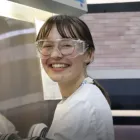
My Future17 journey
to network or do additional courses besides what was necessary to complete my undergraduate degree.
During the first few months, the opportunity arose for me to take part in the pilot cohort of the Furture17 programme.
As I was working towards a postgraduate qualification in environmental management, I felt that it was an amazing opportunity to widen my field of knowledge regarding sustainable development goals, network with like-minded individuals and improve my soft skills.
Our team was designated to a company called Climate-KIC, Europe’s largest public-private innovation partnership focused on climate innovation to mitigate and adapt to climate change.
Our task focused on looking at the production and logistics of timber, concrete and steel production. The outcome of our project focused on developing a circular economy within the building industry.
We aimed to do this in the following ways:
In an ever-growing world where globalisation continues to change the way business is done and the people you work with, this course has helped me build soft and technical skills.
Working with a teammate in Brazil, approximately five hours behind South Africa, was something we had to take into consideration and accommodate when creating our internal deadlines.
Wider time management to balance my primary academic studies with the Future17 workload was also crucial, while I also learned how to deal with peers who had varying ideas, finding ways to be inclusive and build upon these ideas to ensure that all voices were heard.
On the technical side, I was at the time, mainly a social scientist with little knowledge of the building industry. However, by completing this task, I learnt a great deal about economics, supply chain management, logistics but also the built environment.
Testimonials
The impact of Future17
I would like to give my utmost thanks to Angie Du Plessis, Luiza Sobhie Munoz and Jack Potter for being such excellent teammates as without them, I would never have learnt as much or enjoyed my time doing this short course.
This short course has influenced not only my career aspirations but also driven me to be more involved in similar programmes.
Immediately after the course, I signed up for the pilot Global Alliance of Universities of Climate ‘Climate x’ Leadership Training Programme where I became a global youth ambassador and subsequently a mentor in 2023.
Furthermore, it has influenced my research focus for my Master’s in Urban and Regional Planning thesis, which aims to look at how green infrastructure strategies can combat climate change within urban planning policies.
As Head of Content, Craig is responsible for all articles and guides published across TopUniversities and TopMBA. He has nearly 10 years of experience writing for a student audience and extensive knowledge of universities and study programs around the world.
Recommended articles Last year
QS ImpACT MBA Leadership Sch…
QS ImpACT MBA Community Scho…
QS ImpACT Women's Schol…