How studying abroad in Sri Lanka shaped my entire career | TopUniversities
501
Views

How studying abroad in Sri Lanka shaped my entire career

User Image
By Keshala Jayawickrama Updated Apr 15, 2026
501 Views

Save

Share

 
An international graduate in Srilanka

Not every study abroad story follows the same script, and that’s exactly what makes Anne Mendis’ story worth telling. 

Some choose study destinations based on rankings, others chase career opportunities, and some simply follow the crowd. But every so often, you come across a student whose choice is shaped less by convention and more by what they feel is right for their own journey. 

This isn’t a story about choosing one country over another. It’s about what happens when someone chooses an environment that helps them reset, grow, and rediscover who they are. 

Where it all started

Raised in the US in a fairly typical South Asian household, Anne’s early life followed a pretty familiar script: do well in school, aim high, and stick to the ‘safe’ paths. For her, that meant science. She got into research early, worked on both nanotech and organic chemistry, and even co-authored a paper by the time she was 19. 

But somewhere along the way, things stopped feeling aligned for Anne. So, she decided to briefly step away from university and try working instead. The part-time jobs she took on ended up teaching her more than she expected, grounding her in a different way and helping her build soft skills she’s carried with her ever since. 

“At one point, I realised that people work these jobs to feed their families, and I was there simply because I didn’t know what I was doing with my life.” 

Going back to resuming her studies wasn’t really a question at that point, it was more about how and where. 

While community college in the US was a reasonable option, she noticed that the cost wasn’t too far off from pursuing a degree in Sri Lanka. So, she brought the idea up at home. 

As expected, it wasn’t immediately welcomed. “Everybody except my brother thought I was crazy,” she laughed. 

“I  wanted to do marketing, but my mother and father wanted me to do management information systems, which is a half marketing, half IT degree, which I'm kind of grateful they did give me that push, because it did become an advantage in my career later on.” 

Takeaway: Your first direction doesn’t have to be your final one. What matters is recognising when something isn’t aligned and having the courage to pivot toward something that is. 
Making the most of the experience studying abroad

When Anne first moved to Sri Lanka, the plan was to finish her degree and eventually head back to the US. “I didn’t really think about building a career here at the beginning,” she said. “It was more like I needed a restart.” 

But that mindset didn’t last long. In her first year, she attended a career session hosted by Unilever. What seemed like just another workshop actually ended up shifting how she saw things.  

She came across an opportunity to apply for a student ambassador programme at Unilever and decided to go for it. Looking back, that moment marked a turning point in Anne’s career. Not just because of the role itself, but because of what it represented.  

“I saw how these people communicated, how they carried themselves, and I thought, how is this any different from building a career anywhere else?” 

From that point on, she approached university differently. 

Instead of just focusing on academics, she put herself into as many environments as possible, joining clubs, taking on roles, and saying yes to opportunities even when she wasn’t fully sure where they’d lead.  

That willingness to show up made all the difference. 

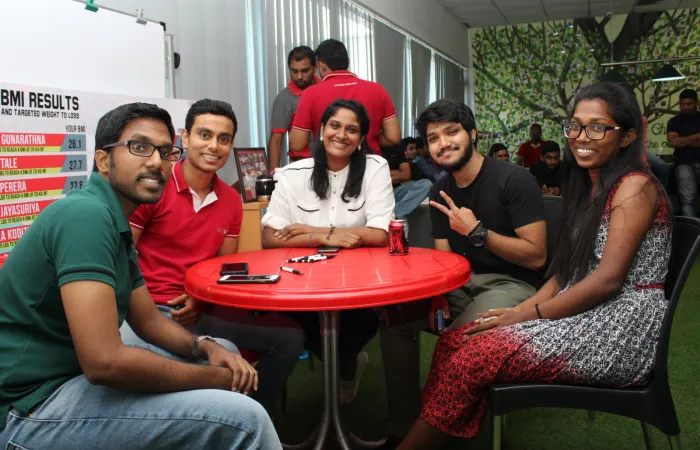
Anne exploring extra curricular activities outside of the classroom

Anne exploring extracurricular activities outside the classroom

Over time, she built skills that couldn’t be taught in a classroom: learning how to communicate across different audiences, adapt to unfamiliar situations, and carry herself with confidence.  

“I wasn’t always a confident speaker,” she said. “I had to learn how to communicate with people who didn’t always understand me. I had to slow down, adjust how I speak, and become more intentional, it’s something I was forced to learn.” 

Living and studying in a completely different environment also pushed her in ways she didn’t expect. It forced her to step out of her comfort zone, understand different perspectives, and approach challenges head-on. 

“If I had stayed in the US, I think I would have stayed in my comfort bubble,” she reflected. “Being in Sri Lanka forced me to grow.” 

Takeaway: Where you study matters less than how you show up. The environment can shape you, but it’s what you do within it that really defines your growth. 

Seeing opportunity where others don’t

Instead of seeing Sri Lanka as just a temporary stop, she started seeing it as a place where there was actually room to grow. 

“The ecosystem is much more vast in Sri Lanka than people realise. If you want to start something, you can do it quite easily. In other countries, ten other people are already doing the same thing,” she explained. 

Of course, studying and setting up a career in Sri Lanka wasn’t always smooth sailing for Anne. There were challenges, differences in systems, infrastructure, even how people perceived her.  

But instead of seeing those as dealbreakers, she treated them as part of the process. “You might have to push a bit more, figure things out yourself but that’s true anywhere,” she added. 

“If I lived in America, I would have always stayed in my comfort zone and bubble. I don't think that I would be as ambitious, as creative, as solution oriented, and as much wanting to grow and learn if I didn't live here.” 

Takeaway: Opportunities aren’t always in the most obvious places, so it's important to develop the skill to recognise what’s been there all along and to learn how to build on it. 

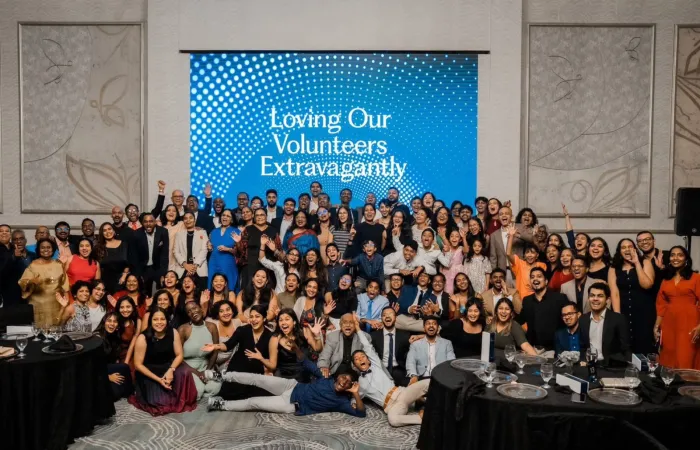
Anne volunteering to create herself more opportunities

Anne embracing growth beyond her comfort zone

Building a sustainable career abroad

Anne didn’t arrive at success overnight. Starting with smaller roles, she moved across companies, exploring everything from backend work to social media, agency environments, and eventually leadership positions. Each step added a new layer to her skill set, shaping her into a well-rounded marketer. 

“People need to get out of this mindset, ‘I have a degree, so I’m owed something.’ The world doesn’t owe you anything. I built my credibility by chasing opportunities and proving, over time, that I could do it, not just to others, but to myself” Anne advised. 

Now with more experience and perspective than her overly ambitious 20-year-old self, she began to reflect on what truly mattered. In doing so, she recognised that her real strengths lay in not just in building brands from the ground up, but also in building people. 

“The part I loved the most was helping people. Teaching interns, helping someone find their voice, seeing that shift in confidence. It always felt like the cherry on top when someone said, ‘what you shared helped me get a job’ or ‘you helped me navigate a situation with my boss.’” 

She also noticed a contradiction many people live with: we are often willing to take risks, endure stress, and push our limits for someone else’s vision, yet hesitate to do the same for ourselves, often out of fear. 

“Fear never stopped me in my career. Fear never stopped me in networking, but fear stopped me from really realising my own potential in my own thing.” 

So instead of continuing to give into her fear, she chose to step out of her comfort zone once again, this time building something of her own. Today, she works on creating experiences and spaces that help people connect more meaningfully, blending her marketing background with her natural ability to understand and engage with people. 

Takeaway for students: Your first job doesn’t have to define your entire career. Focus on building a solid set of transferable skills, stay curious, and pay attention to what genuinely excites you, not just what looks impressive on paper.  

Lessons from her journey to yours

Throughout her journey, Anne had always appeared confident. But, as she admits, it was a skill she had worked on for years. From what she has learned, confidence isn’t about being the loudest person in the room; it’s about knowing who you are.“You can be a quiet person and still be confident,” she explained. “It comes from knowing yourself and being comfortable with that.” 

She also shared her perspective from being involved in the hiring cycle and working closely with interns: “I think what makes people stand out at an interview comes down to three things.  

“First, they’ve done their research on the company. Second, they’ve done something outside of their uni work that they can actually speak about. How can you know yourself if all you do is what someone else told you to do? You need experiences to stand out.  

“Third, be technically versed in your field with basic knowledge and skills, and have a breadth of skills, a horizontal layer that you can build depth in as you grow in your career.” 

  • Shalini NS
  • Sanat P

saved this article

  • Shalini NS
  • Sanat P

saved this article

Recommended Articles Last year