Your input will help us improve your experience.You can close this popup to continue using the website or choose an option below to register in or login.
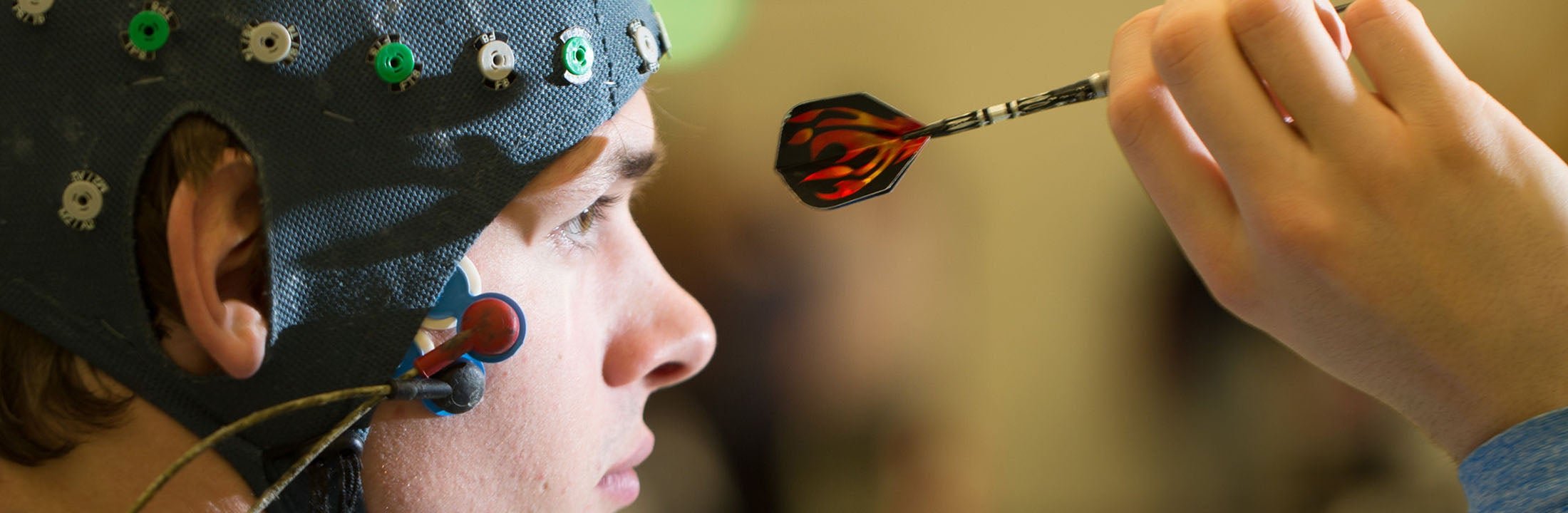
How do toddlers learn to walk? How can augmented reality help patients with Parkinson’s Disease? How do top athletes get maximum performance out of their muscles? What’s the best training to improve stability and prevent falls among elderly people? As a student in the two-year Research Master Human Movement Sciences at Vrije Universiteit Amsterdam, you will learn how to answer urgent and socially relevant questions while conducting research aimed at unraveling the secrets of human movement through fundamental and applied scientific studies in Sport and Health.
Human movement is essential for understanding how we function, perform and stay healthy, yet it remains one of the most complex and dynamic areas in science. It is shaped by intricate interactions between the body, brain, behaviour and environment, and affects nearly every aspect of daily life. Questions about motor control, physical resilience or recovery after injury, exploring human movement opens the door to deeper scientific insight with direct societal relevance.
You will specialise in one of four scientific domains (biomechanics, movement neuroscience, psychology, physiology), while developing advanced research and academic skills that prepare you to address complex questions in application areas such as sports, prevention and health, physical education, and high-demand professions (e.g., police, military). From the start, you are encouraged to connect theoretical insight to real-world impact, laying the foundation for a career in academia, or for contributing to research and development in industry or other non-academic institutions.
VU Faculty of Behavioural and Movement Sciences is ranked No.6 in the world on the Shanghai Ranking of Sport Science Schools and Departments.
Summer School
Apply to VU Amsterdam Summer School and develop your academic skills in a focused and inspiring study abroad experience.
Programme overview
Main Subject
Sports-Related Subjects
Degree
MSc
Study Level
Masters
Study Mode
On Campus
How do toddlers learn to walk? How can augmented reality help patients with Parkinson’s Disease? How do top athletes get maximum performance out of their muscles? What’s the best training to improve stability and prevent falls among elderly people? As a student in the two-year Research Master Human Movement Sciences at Vrije Universiteit Amsterdam, you will learn how to answer urgent and socially relevant questions while conducting research aimed at unraveling the secrets of human movement through fundamental and applied scientific studies in Sport and Health.
Human movement is essential for understanding how we function, perform and stay healthy, yet it remains one of the most complex and dynamic areas in science. It is shaped by intricate interactions between the body, brain, behaviour and environment, and affects nearly every aspect of daily life. Questions about motor control, physical resilience or recovery after injury, exploring human movement opens the door to deeper scientific insight with direct societal relevance.
You will specialise in one of four scientific domains (biomechanics, movement neuroscience, psychology, physiology), while developing advanced research and academic skills that prepare you to address complex questions in application areas such as sports, prevention and health, physical education, and high-demand professions (e.g., police, military). From the start, you are encouraged to connect theoretical insight to real-world impact, laying the foundation for a career in academia, or for contributing to research and development in industry or other non-academic institutions.
VU Faculty of Behavioural and Movement Sciences is ranked No.6 in the world on the Shanghai Ranking of Sport Science Schools and Departments.
Summer School
Apply to VU Amsterdam Summer School and develop your academic skills in a focused and inspiring study abroad experience.
Admission Requirements
93+
3.3+
6.5+
Students must meet the following admission requirements:
1. Academic requirements
Your previous education needs to be deemed equivalent to at least a Dutch academic Bachelor’s degree ( wetenschappelijk onderwijs, WO ) obtained at a research university (nominal duration 3 years).
2. Programme specific requirements
a relevant Bachelor's degree, such as human movement sciences, medicine, dentistry, health sciences, medical biology, or biomedical technology
GPA of 7.0 out of 10 in the Dutch grading system or higher (or the international equivalent, e.g. a B+ or a GPA of 3.0) for the final two years of the Bachelor's programme
strong interest in and aptitude for research, as demonstrated in research oriented courses, internships and/or thesis
the admission procedure includes an interview with the Admission Board.
What if you do not meet all admission criteria
If you do not meet the admission criteria, the Admission board may decide that you are admissible after you have eliminated your deficiencies. These deficiencies depend on your educational background. If you do not meet the admission criteria, you will receive a list of online courses you will be asked to attend and pass in order to eliminate the deficiencies. We recommend to start the courses prior to 1 April if you intend to start in September. Furthermore, if you are unsure about your eligibility to our programme, we recommend applying before 1 March in order to leave sufficient time for the admission process and the deficiency programme.
Please be aware that the online programme is challenging and only 20% of the participants successfully pass the exams. The costs of the online courses are €204,- per course and are non-refundable. The online courses particularly focus on research methods that are commonly used in the field of Human Movement Sciences, like mathematics, programming, biomechanics, statistics and measuring movement, and correspond to the “Requirements Methodological Knowledge” section in our list of admission criteria.
Because the two-year Research Master's programme is a selective master, your results from your bachelor and the deficiencies courses will be taken into account by the Admission Board in deciding whether you can be admitted to the Research Master's programme afterwards.
3. English-language proficiency requirements
You will have to demonstrate sufficient English language proficiency. You can find an overview of relevant information to demonstrate your English language proficiency on the language requirement page.
2 Years
Sep
Tuition fees
Domestic
2,694 EUR
International
24,150 EUR
Scholarships
Selecting the right scholarship can be a daunting process. With countless options available, students often find themselves overwhelmed and confused. The decision can be especially stressful for those facing financial constraints or pursuing specific academic or career goals.
To help students navigate this challenging process, we recommend the following articles:
Start at the programme page of the degree you are interested in. Read the admission requirements and application steps carefully. Then apply through Studielink, complete your application on your VU dashboard, pay the application fee (if required), and wait for the admission decision, which is usually communicated within 4–6 weeks.
Check the specific ‘Admissions’ section on your programme’s page for required documents. General requirements include your diploma, transcripts and other supporting documents. Documents should be in English, German, Dutch, French, Italian, or Spanish; others must be translated into English.
Yes, for Master’s, you can apply without a diploma copy; if conditionally admitted, you must send a certified diploma copy before the deadline.
The International Office checks your application for completeness. If there’s missing or incorrect information, they will contact you. Otherwise, your application is reviewed and you typically receive a decision within 4–8 weeks. Check your email (including spam) regularly for updates.
Human Movement Sciences (Research)
Vrije Universiteit Amsterdam, Amsterdam, Netherlands
# =42QS Subject Rankings
24 monthsProgramme duration
24,150 EURTuition Fee/year
Sports-Related SubjectsMain Subject Area
Programme overview
Main Subject
Sports-Related Subjects
Degree
MSc
Study Level
Masters
Study Mode
On Campus
How do toddlers learn to walk? How can augmented reality help patients with Parkinson’s Disease? How do top athletes get maximum performance out of their muscles? What’s the best training to improve stability and prevent falls among elderly people? As a student in the two-year Research Master Human Movement Sciences at Vrije Universiteit Amsterdam, you will learn how to answer urgent and socially relevant questions while conducting research aimed at unraveling the secrets of human movement through fundamental and applied scientific studies in Sport and Health.
Human movement is essential for understanding how we function, perform and stay healthy, yet it remains one of the most complex and dynamic areas in science. It is shaped by intricate interactions between the body, brain, behaviour and environment, and affects nearly every aspect of daily life. Questions about motor control, physical resilience or recovery after injury, exploring human movement opens the door to deeper scientific insight with direct societal relevance.
You will specialise in one of four scientific domains (biomechanics, movement neuroscience, psychology, physiology), while developing advanced research and academic skills that prepare you to address complex questions in application areas such as sports, prevention and health, physical education, and high-demand professions (e.g., police, military). From the start, you are encouraged to connect theoretical insight to real-world impact, laying the foundation for a career in academia, or for contributing to research and development in industry or other non-academic institutions.
VU Faculty of Behavioural and Movement Sciences is ranked No.6 in the world on the Shanghai Ranking of Sport Science Schools and Departments.Summer School
Apply to VU Amsterdam Summer School and develop your academic skills in a focused and inspiring study abroad experience.
Programme overview
Main Subject
Sports-Related Subjects
Degree
MSc
Study Level
Masters
Study Mode
On Campus
How do toddlers learn to walk? How can augmented reality help patients with Parkinson’s Disease? How do top athletes get maximum performance out of their muscles? What’s the best training to improve stability and prevent falls among elderly people? As a student in the two-year Research Master Human Movement Sciences at Vrije Universiteit Amsterdam, you will learn how to answer urgent and socially relevant questions while conducting research aimed at unraveling the secrets of human movement through fundamental and applied scientific studies in Sport and Health.
Human movement is essential for understanding how we function, perform and stay healthy, yet it remains one of the most complex and dynamic areas in science. It is shaped by intricate interactions between the body, brain, behaviour and environment, and affects nearly every aspect of daily life. Questions about motor control, physical resilience or recovery after injury, exploring human movement opens the door to deeper scientific insight with direct societal relevance.
You will specialise in one of four scientific domains (biomechanics, movement neuroscience, psychology, physiology), while developing advanced research and academic skills that prepare you to address complex questions in application areas such as sports, prevention and health, physical education, and high-demand professions (e.g., police, military). From the start, you are encouraged to connect theoretical insight to real-world impact, laying the foundation for a career in academia, or for contributing to research and development in industry or other non-academic institutions.
VU Faculty of Behavioural and Movement Sciences is ranked No.6 in the world on the Shanghai Ranking of Sport Science Schools and Departments.Summer School
Apply to VU Amsterdam Summer School and develop your academic skills in a focused and inspiring study abroad experience.
Admission Requirements
Students must meet the following admission requirements:
1. Academic requirements
Your previous education needs to be deemed equivalent to at least a Dutch academic Bachelor’s degree ( wetenschappelijk onderwijs, WO ) obtained at a research university (nominal duration 3 years).
2. Programme specific requirements
a relevant Bachelor's degree, such as human movement sciences, medicine, dentistry, health sciences, medical biology, or biomedical technology
GPA of 7.0 out of 10 in the Dutch grading system or higher (or the international equivalent, e.g. a B+ or a GPA of 3.0) for the final two years of the Bachelor's programme
strong interest in and aptitude for research, as demonstrated in research oriented courses, internships and/or thesis
the admission procedure includes an interview with the Admission Board.
What if you do not meet all admission criteria
If you do not meet the admission criteria, the Admission board may decide that you are admissible after you have eliminated your deficiencies. These deficiencies depend on your educational background. If you do not meet the admission criteria, you will receive a list of online courses you will be asked to attend and pass in order to eliminate the deficiencies. We recommend to start the courses prior to 1 April if you intend to start in September. Furthermore, if you are unsure about your eligibility to our programme, we recommend applying before 1 March in order to leave sufficient time for the admission process and the deficiency programme.
Please be aware that the online programme is challenging and only 20% of the participants successfully pass the exams. The costs of the online courses are €204,- per course and are non-refundable. The online courses particularly focus on research methods that are commonly used in the field of Human Movement Sciences, like mathematics, programming, biomechanics, statistics and measuring movement, and correspond to the “Requirements Methodological Knowledge” section in our list of admission criteria.
Because the two-year Research Master's programme is a selective master, your results from your bachelor and the deficiencies courses will be taken into account by the Admission Board in deciding whether you can be admitted to the Research Master's programme afterwards.
3. English-language proficiency requirements
You will have to demonstrate sufficient English language proficiency. You can find an overview of relevant information to demonstrate your English language proficiency on the language requirement page.Tuition fees
Domestic
International
Scholarships
Selecting the right scholarship can be a daunting process. With countless options available, students often find themselves overwhelmed and confused. The decision can be especially stressful for those facing financial constraints or pursuing specific academic or career goals.
To help students navigate this challenging process, we recommend the following articles:

How to get a full scholarship
Looking for a fully-funded scholarship to see you into university? Find out how to boost your chances of getting one.
Scholarships to study abroad
Find scholarships to study abroad with our lists of international scholarships – categorized by country, by subject, and by type of student.
Scholarship Applications: Frequently Asked Questions
Get answers to all your questions about scholarship applications, including tips on how to find scholarships and chances of success.
More programmes from the university
Genes in Behaviour and Health (Research Master)
Social Sciences for a Digital Society (Research Master)
Arts and Humanities (7)
Ancient Studies
Ancient Studies
Archaeology
Archaeology
History and International Studies
Language and Media
Language and Media
Language and Mind
Language and Mind
Liberal Arts and Sciences
Literature and Society English
Philosophy
Philosophy
Philosophy, Politics and Economics (PPE)
Business and Management (7)
Bachelor Econometrics and Operations Research
Business Analytics
Business Analytics
Econometrics and Data Science
Economics and Business Economics
International Business Administration
Engineering and Technology (7)
Artificial Intelligence
Computer Science
Computer Science
Creative Technology
Creative Technology
Mechanical Engineering
Life Sciences and Medicine (7)
Psychology
Psychology
Natural Sciences (7)
Mathematics
Mathematics
Others (7)
Biomedical Sciences
Biomedical Sciences
History and International Studies
Social Sciences and Management (7)
Communication Science
Communication and Information Studies
Cultural Anthropology and Development Sociology
Law in Society
Law in Society
Media, Art, Design and Architecture
Political Science: Global Politics
Arts and Humanities (6)
Arts & Culture
Arts & Culture
Arts & Culture: Comparative Arts and Media Studies
Arts & Culture: Contemporary Art History
Arts & Culture: Design Cultures
Classics and Ancient Civilizations
Classics and Ancient Civilizations Ancient Studies: Classics
Classics and Ancient Civilizations: Ancient Studies
Classics and Ancient Civilizations: Research
Humanities
Humanities
Master's Programme in Archaeology
Master's Programme in Architecture, Cities, Landscapes: History and Heritage
Social and Cultural Anthropology
Business and Management (6)
Accounting and Control
Econometrics and Operations Research: Business Engineering and Data-Driven Decision Making
Economics
Economics
International Business Law
Marketing: Brand and Customer Management
Master of Science in Business Administration
Master's Programme in Business Analytics
Spatial and Applied Economics
Engineering and Technology (6)
Biomedical Technology and Physics
Business Data Science (Research Master)
Computer Science: Big Data Engineering
Computer Security
Computer Security
Master's Programme in Artificial Intelligence
Master's in Public Administration: Artificial Intelligence and Governance
Life Sciences and Medicine (6)
AI for Health
AI for Health
Bioinformatics and Systems Biology
Biomolecular Sciences
CIS: Dialogue, Health and Society
CIS: Multimodal Communication
Clinical and Developmental Psychopathology (Research)
Genes in Behaviour and Health (Research Master)
Global Health (Research Master)
Master's Programme in Biomedical Sciences
Musculoskeletal Physiotherapy Sciences
Neurosciences
Neurosciences
Natural Sciences (6)
Earth Sciences
Earth Sciences
Ecology and Evolution
Environment and Resource Management
Hydrology
Hydrology
Social Sciences and Management (6)
Human Movement Sciences (Research)
Human Movement Sciences: Biophysics in Sport
Information Sciences
Political Sciences
Political Sciences
Public Administration
Religion and Theology
Social Psychology
Social Psychology
Social Sciences for a Digital Society (Research Master)
Human Movement Sciences (Research)
Videos & media
Videos & media
Frequently Asked Questions