





# 1001-1200QS World University Rankings

65Undergrad & Postgrad Programmes

16 % International students


About MATE Hungarian University of Agriculture and Life Sciences
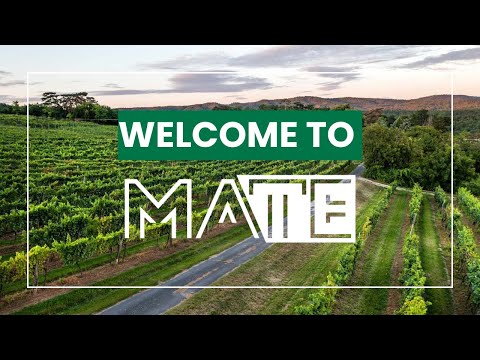
With the founding of the Hungarian University of Agriculture and Life Sciences (MATE), our university has become part of the renewal of Hungarian higher education. MATE aims to be among the region’s leading agricultural universities while serving as a pillar of Hungarian agrarian education. This commitment honours Hungary’s rich agricultural traditions, while leveraging opportunities in higher education to support the country’s economic development.
Established on 1st February 2021, MATE was formed through the integration of Szent István University (SZIE), Kaposvár University, the Gyöngyös Campus of Eszterházy Károly University, the Georgikon Faculty of University of Pannonia and the National Agricultural Research and Innovation Centre. This consolidation made MATE one of Europe’s largest and oldest multidisciplinary institutions focused on agriculture.
MATE’s mission is to embrace the increasing significance of agriculture and play a proactive role in its advancement. As a dynamic university, we bridge the gap between scientific innovation and farmers and industry, covering the entire supply chain from “farm to fork” and beyond.
Recognizing the importance of internationalization, MATE fosters global collaborations with partners on nearly every continent. This enables our students and staff to engage in the essential global exchange of knowledge, a cornerstone for a secure future. We are proud to play a vital role in this process.
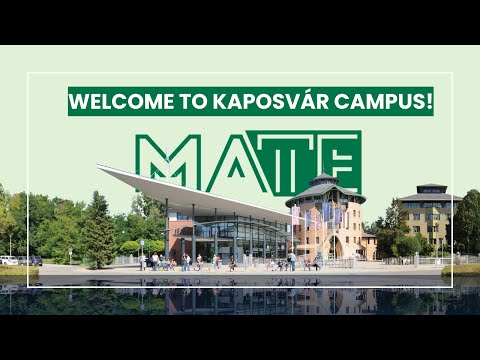
As a evolving educational institution, we are committed to providing students comprehensive, market-oriented knowledge that is globally competitive. We draw inspiration from Europe’s most successful universities, integrating their lessons learned, with our state-of-the-art methodologies, to design the best programmes for our students. The university campuses, spread across the country, boast a unique architecture and infrastructure, offering students and staff a comfortable, relaxing environment for the attainment of knowledge. With a history spanning over two centuries, MATE blends Hungary’s rich traditions with cutting-edge technology to prepare students for today’s competitive labour markets. We offer diverse programmes - from natural sciences and engineering to business, social sciences, pedagogy and art - at all levels, from vocational training to PhD. and beyond.
As a research-driven university, MATE maintains world-class scientific excellence, particularly in the fields of Agriculture and Forestry, as well as in related interdisciplinary areas. This is thanks to the supportive ecosystem providing dedicated programs for scholars, from students to senior researchers.
In third mission activities and sustainability, MATE plays a proactive role as a key stakeholder in the agricultural sector and related fields, applying the latest scientific advancements to contribute to achieving the Sustainable Development Goals:
https://en.uni-mate.hu/sustainable-development-goals-sdgs
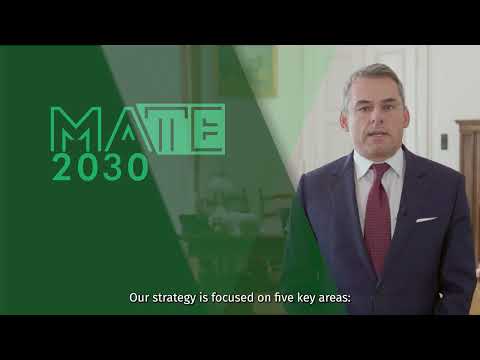
In 2024, the University announced its 2030 strategy program, which aims to train the next generation of agricultural professionals, foster innovation, strengthen knowledge-intensive agriculture, increase national competitiveness, further building a green future, uniting the agricultural community, and promoting cohesion between rural and urban areas. The MATE 2030 strategic vision and projects were established and launched to make our institute “a dynamic, impact university, that doesn’t just follow, but shapes and rewrites the direction of change in agriculture” (Prof. Csaba Gyuricza, Rector of MATE):
https://en.uni-mate.hu/mate-2030-strategy
The strategy is focused on five key areas :
- · Educating the future generation of agricultural leaders
- · Innovative knowledge generation in the Carpathian Basin
- · Strengthening knowledge-intensive agriculture, enhancing national competitiveness
- · Making an impact to build a green future
- · Uniting the agricultural community, promoting rural-urban cohesion.
Within the framework of this strategy, programs have been launched that recognize educational and research activities in a broad sense, which are unparalleled in Hungary and worldwide, and strengthen the university's reputation. Among these we can mention the following:
- · SMART UNI – Teaching Compass programme
- · Flagship Research Groups (FRGP) and Research Excellence (REP) Programmes
- · Innovation Competitiveness Diagnostics
Through these dynamic efforts, MATE continues to strengthen its ranking position and global visibility. We remain dedicated to becoming the leading agricultural university in the region while further solidifying our position in the field of modern agriculture.
About MATE Hungarian University of Agriculture and Life Sciences
With the founding of the Hungarian University of Agriculture and Life Sciences (MATE), our university has become part of the renewal of Hungarian higher education. MATE aims to be among the region’s leading agricultural universities while serving as a pillar of Hungarian agrarian education. This commitment honours Hungary’s rich agricultural traditions, while leveraging opportunities in higher education to support the country’s economic development.
Established on 1st February 2021, MATE was formed through the integration of Szent István University (SZIE), Kaposvár University, the Gyöngyös Campus of Eszterházy Károly University, the Georgikon Faculty of University of Pannonia and the National Agricultural Research and Innovation Centre. This consolidation made MATE one of Europe’s largest and oldest multidisciplinary institutions focused on agriculture.
MATE’s mission is to embrace the increasing significance of agriculture and play a proactive role in its advancement. As a dynamic university, we bridge the gap between scientific innovation and farmers and industry, covering the entire supply chain from “farm to fork” and beyond.
Recognizing the importance of internationalization, MATE fosters global collaborations with partners on nearly every continent. This enables our students and staff to engage in the essential global exchange of knowledge, a cornerstone for a secure future. We are proud to play a vital role in this process.
As a evolving educational institution, we are committed to providing students comprehensive, market-oriented knowledge that is globally competitive. We draw inspiration from Europe’s most successful universities, integrating their lessons learned, with our state-of-the-art methodologies, to design the best programmes for our students. The university campuses, spread across the country, boast a unique architecture and infrastructure, offering students and staff a comfortable, relaxing environment for the attainment of knowledge. With a history spanning over two centuries, MATE blends Hungary’s rich traditions with cutting-edge technology to prepare students for today’s competitive labour markets. We offer diverse programmes - from natural sciences and engineering to business, social sciences, pedagogy and art - at all levels, from vocational training to PhD. and beyond.
As a research-driven university, MATE maintains world-class scientific excellence, particularly in the fields of Agriculture and Forestry, as well as in related interdisciplinary areas. This is thanks to the supportive ecosystem providing dedicated programs for scholars, from students to senior researchers.
In third mission activities and sustainability, MATE plays a proactive role as a key stakeholder in the agricultural sector and related fields, applying the latest scientific advancements to contribute to achieving the Sustainable Development Goals:
https://en.uni-mate.hu/sustainable-development-goals-sdgs
In 2024, the University announced its 2030 strategy program, which aims to train the next generation of agricultural professionals, foster innovation, strengthen knowledge-intensive agriculture, increase national competitiveness, further building a green future, uniting the agricultural community, and promoting cohesion between rural and urban areas. The MATE 2030 strategic vision and projects were established and launched to make our institute “a dynamic, impact university, that doesn’t just follow, but shapes and rewrites the direction of change in agriculture” (Prof. Csaba Gyuricza, Rector of MATE):
https://en.uni-mate.hu/mate-2030-strategy
The strategy is focused on five key areas :
- · Educating the future generation of agricultural leaders
- · Innovative knowledge generation in the Carpathian Basin
- · Strengthening knowledge-intensive agriculture, enhancing national competitiveness
- · Making an impact to build a green future
- · Uniting the agricultural community, promoting rural-urban cohesion.
Within the framework of this strategy, programs have been launched that recognize educational and research activities in a broad sense, which are unparalleled in Hungary and worldwide, and strengthen the university's reputation. Among these we can mention the following:
- · SMART UNI – Teaching Compass programme
- · Flagship Research Groups (FRGP) and Research Excellence (REP) Programmes
- · Innovation Competitiveness Diagnostics
Through these dynamic efforts, MATE continues to strengthen its ranking position and global visibility. We remain dedicated to becoming the leading agricultural university in the region while further solidifying our position in the field of modern agriculture.
Available programmes

University information
Hungarian University of Agriculture and Life Sciences (MATE) offers clear, student-friendly application pathways for self-financed BSc and MSc degrees and doctoral studies. For bachelor’s and master’s programmes, applicants use the DreamApply online platform to submit a completed application form, academic transcripts, a motivation letter, CV, English language proof (minimum B2 level), and pay a EUR 100 application fee.
The academic year 2026/27 cycle opens 19 January and closes 30 April, after which submitted applications are reviewed and interviews conducted before issuing letters of acceptance and guidance for visa processes.
Prospective PhD candidates submit an application form with a research plan, two academic references, transcripts, and proof of English proficiency to the Doctoral Schools office. A EUR 100 registration fee is required, and international applicants may be interviewed. Conditional acceptance is granted pending payment of tuition fees.
These structured procedures support MATE’s growing global student community across diverse disciplines.
Application Procedure for Self-financed Students:
https://en.uni-mate.hu/application-procedure-for-bsc-msc
Application for Doctoral Study:
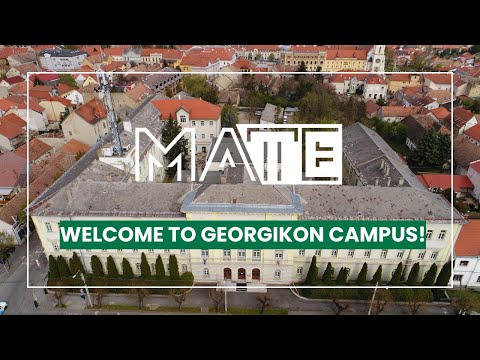
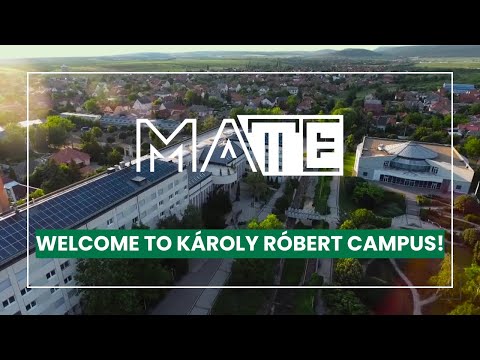
Hungarian University of Agriculture and Life Sciences (MATE) campuses offer libraries, computer labs, sports centers, research farms, botanical gardens, and student lounges. Each campus provides academic and recreational spaces to support both study and student life.
The arboreta and botanical gardens serve as vital resources for both education and recreation at MATE. They play a key role in practical, hands-on teaching, allowing students in botany, horticulture, landscape architecture, and environmental sciences to gain experience in plant identification, cultivation, and ecological management. Beyond their academic use, these green spaces offer opportunities for relaxation, outdoor study, and community activities, fostering well-being and inspiration. By combining practical training with leisure and nature appreciation, MATE’s arboreta and botanical gardens deepen students’ understanding of plant diversity, conservation, and sustainable landscape practices.
https://uni-mate.hu/tavasz2023
Budai Arboretum
Located on MATE’s Buda Campus, this 7.5-hectare arboretum on the Gellért Hill hosts around 2,000 woody plant species, hundreds of bulb plants, and approximately 250 perennial ornamental species. It serves as a living laboratory for horticultural education, allowing students to study diverse plants under its unique microclimate while promoting biodiversity conservation. With a rich history dating back to the 19th-century horticultural school founded by Dr. Ferenc Entz, it is now a protected nature conservation area.
https://budaiarboretum.uni-mate.hu /
Botanical garden in Gödöllő
Covering 4.5 hectares, the Gödöllő garden contains over 1,400 native and exotic plant species, including herbs, medicinal plants, wild roses, bamboo, and tropical species. It provides hands-on learning opportunities for students in plant biology, ecology, and sustainable horticulture.
https://godolloibotanikuskert.uni-mate.hu/
Georgikon botanical garden
With a collection of around 500 taxa, this historic garden features conifers, evergreens, ornamental shrubs, and rare trees such as Pinus cembra and Ginkgo biloba. It supports teaching, research, and conservation projects, serving as a practical training ground for students.
https://georgikonbotanikuskert.uni-mate.hu/
Arboretum in Erdőtelek
Focused on forestry and ecological education, this arboretum contains diverse collections of trees and shrubs, offering students practical training in silviculture, forest management, and environmental sciences.
https://erdotelkiarboretum.uni-mate.hu/inform%C3%A1ci%C3%B3k
Arboretum in Szarvas
The garden also known as Pepi Garden – Home to extensive tree and ornamental plant collections, it provides an interactive space for student training, ecological research, and community engagement, combining practical learning with recreation and environmental awareness. With its 82 hectares and more than 1,600 woody plant species, making it the largest MATE arboretum.
https://pepikert.hu/kapcsolat/
Botanical garden in Soroksár
It serves both educational purposes and public engagement, showcasing sustainable landscape practices. Approximately 60 hectares featuring preserved and reconstructed Pannonian habitat mosaics, including sand dunes with Stipa borysthenica, dry marsh meadows, oak forests, and water habitats. This garden preserves a sand grassland habitat, formerly an acacia forest, now replanted with native species such as Juniperus communis, Quercus robur, and Iris arenaria.
https://soroksaribotanikuskert.uni-mate.hu/
Rose garden in Budatétény
The garden covers 2.5 hectares, with about 1,000 variety‑verified rose cultivars and around 7,000 planted rose bushes, including historical, tea hybrid, modern, and Hungarian varieties.
https://www.facebook.com/BudatetenyiRozsakert/
In about a 5-minute walk distance from Szent István Campus, Gödöllő, the swimming pool of MATE GEAC is a modern and well-equipped facility, ideal for both recreational swimming and organized training in a friendly university sports environment.
For more information visit the campus websites:
https://en.uni-mate.hu/en/campuses
Student life
Hungarian University of Agriculture and Life Sciences (MATE) offers a dynamic and supportive student experience grounded in a rich academic tradition and vibrant campus life. MATE hosts a wide range of undergraduate, graduate, and PhD programmes across disciplines including agriculture, environmental and food sciences, engineering, economics, and the arts with over 40 English-taught degrees, fostering a diverse international community.
Student life at MATE is engaging and multicultural, featuring social, cultural and sustainability events, such as international dinners, garden projects, poetry days, and campus-wide activities that connect students across campuses. Campuses are situated in scenic locations like Gödöllő, Budapest, Keszthely, Kaposvár, and Gyöngyös, each offering modern libraries, sports facilities, labs, botanical gardens, and green spaces that enhance learning and wellbeing. Accommodation options include on-campus dormitories with communal spaces and active student-led programmes. Overall, MATE blends rigorous academics with a connected, student-centric community rooted in tradition and innovation.
The Student Mentorship Programme of MATE is a unique initiative designed to support students at critical points in their academic and professional journey. By providing personalized mentorship, the program motivates students, helps them define and achieve their goals, and strengthens their sense of belonging to the university community. Mentorship participation is voluntary or recommended by instructors, with special attention given to students at risk of dropout. Participating mentors receive targeted methodological training that enhances both their mentoring and teaching skills, extending the program’s positive impact to the wider educational culture. The program offers individualized attention, targeted guidance, strong student–faculty relationships, a supportive and mentally safe environment, and encourages more deliberate academic planning. Long-term, the Mentorship Program enhances MATE’s competitiveness by supporting student recruitment and retention, fostering engagement, promoting degree completion, and contributing to the international recognition of its diplomas. Ultimately, it builds an inclusive, modern learning environment where every student can thrive. Beyond measurable results, the mentorship ethos has been integrated into the university’s teaching practices.
The Future Leaders Programme (JVP) is an innovative talent development initiative designed to cultivate the leadership skills and career potential of students. Its mission is to prepare a new generation of leaders who are globally competitive in mindset, skills, and achievements, while promoting MATE’s values and contributing to national development. Participants gain access to exceptional domestic and international professional experiences, develop multidisciplinary knowledge, and build valuable networks to advance their career goals. The program equips students with leadership competencies that are not typically offered in regular coursework, enhancing their distinction among peers and the value of their degrees. JVP offers four distinct career pathways aligned with MATE’s strategic areas: Academia, Innovation, Management, and Policy & Governance. Each pathway provides tailored training, mentoring, and project-based experiences led by expert mentors, supporting students in developing specialized knowledge, critical skills, and hands-on experience in their chosen field. The program provides financial support in the form of a monthly scholarship, which allows students to focus on their personal and professional growth, and participation can count as up to 10 academic credits.
For more information visit the following websites:
https://en.uni-mate.hu/en/students-life-at-mate
https://www.youtube.com/@ircmate9797/playlists
https://en.uni-mate.hu/en/sdg2
Cost of Living
Dormitory accommodation costs around 120–180 EUR per month, depending on the campus and room type. Prices are lower in rural campuses and slightly higher in Budapest.
One can find detailed information about the cost of living in Hungary on the following sites:
https://studyinhungary.hu/living-in-hungary/menu/your-costs-of-living.html
Tuition fees
Domestic
Domestic (Out of State)
International
Hungarian University of Agriculture and Life Sciences (MATE) offers a range of scholarship and funding options for international students who wish to pursue Bachelor’s, Master’s, or PhD studies in Hungary. These opportunities are designed to reduce the financial burden of tuition, living costs, and sometimes other expenses, while also supporting academic and personal development within an international environment.
https://en.uni-mate.hu/en/scholarships
The Stipendium Hungaricum Scholarship is a flagship scholarship programme launched by the Hungarian Government and managed by the Tempus Public Foundation. It offers fully funded opportunities for students from over 100 partner countries to study in Hungary at undergraduate, master’s, or doctoral levels. This scholarship typically covers tuition fees, a monthly stipend, accommodation allowance and health insurance, making it possible for awardees to focus on their studies without the burden of tuition.
The Hungarian Diaspora Scholarship is intended for students with Hungarian roots who want to reconnect with their cultural heritage while earning a university degree. This scholarship allows eligible applicants to study at MATE with financial support, often including tuition coverage and integration into Hungarian language and culture.
The Scholarship for Christian Young People (SCYP) is aimed at supporting young Christian students who come from crisis regions of the world or who face threats due to their faith. Selected SCYP scholars receive financial support to pursue degree programmes in Hungary, helping them to advance academically in a stable environment.
The MATE International Scholarship Program (MISP) is MATE’s own scholarship initiative designed to expand access to motivated international students, especially those who applied for Stipendium Hungaricum or SCYP but were not nominated or selected. MISP provides support for both Bachelor’s and Master’s applicants, including tuition fee reductions during the second half of their studies. This programme aligns with MATE’s commitment to research and innovation and offers a pathway for students who may not receive other government-funded scholarships.
The FAO–Hungarian Government Scholarship Programme is a fully funded master’s scholarship that results from a long-term cooperation between the Food and Agriculture Organization of the United Nations and the Hungarian Government. It enables outstanding students from eligible developing countries to obtain a Master of Science degree in specific fields such as aquaculture. This scholarship covers application and tuition fees, basic study materials, dormitory accommodation, subsistence costs, and health insurance for the duration of the programme.
Beyond these major scholarship schemes, MATE fosters a vibrant academic community with additional opportunities such as talent development programmes and leadership initiatives. Although not always classified strictly as scholarships, programmes like the Future Leaders Program provide monthly stipends and professional development support to selected students, illustrating the university’s broader commitment to supporting student success.
MATE participates actively in the Erasmus+ exchange programme, offering students opportunities to study, gain learning experience at partner universities across Europe and beyond. Erasmus+ mobility supports academic development, intercultural learning, and professional growth while ensuring full recognition of completed coursework. Through extensive institutional partnerships, MATE enables students to enhance international competencies and integrate global perspectives into their academic pathways.
MATE is a member of the Central European Exchange Program for University Studies (CEEPUS), promoting academic mobility within Central and Eastern Europe. The programme enables students and faculty to participate in short- and long-term exchanges, joint courses, and network-based collaboration. CEEPUS strengthens regional academic cooperation while supporting high-quality education, research exchange, and multicultural engagement across participating institutions.
Scholarships
Selecting the right scholarship can be a daunting process. With countless options available, students often find themselves overwhelmed and confused. The decision can be especially stressful for those facing financial constraints or pursuing specific academic or career goals.
To help students navigate this challenging process, we recommend the following articles:

How to get a full scholarship
Looking for a fully-funded scholarship to see you into university? Find out how to boost your chances of getting one.


Scholarships to study abroad
Find scholarships to study abroad with our lists of international scholarships – categorized by country, by subject, and by type of student.


Scholarship Applications: Frequently Asked Questions
Get answers to all your questions about scholarship applications, including tips on how to find scholarships and chances of success.

Employability
The Hungarian University of Agriculture and Life Sciences (MATE) offers career support using a variety of approaches. The Career and Life-Path Counseling service is to support students in making informed academic, personal, and professional decisions. The service is designed to help students who may feel uncertain about their future, experience motivational difficulties, or face challenges related to their studies and career planning. Career and life-path counseling at MATE is a supportive, guidance-based process. During the consultations, students can explore their personal strengths, interests, and values, clarify their career goals, and receive help with decision-making. The counseling may also include assistance with choosing a study path, identifying further training opportunities.
The Future Leaders Programme (JVP) of MATE is an innovative talent development initiative designed to cultivate the leadership skills and career potential of students. JVP offers four distinct career pathways aligned with MATE’s strategic areas: Academia, Innovation, Management, and Policy & Governance. Each pathway provides tailored training, mentoring, and project-based experiences led by expert mentors, supporting students in developing specialized knowledge, critical skills, and hands-on experience in their chosen field. The program provides financial support in the form of a monthly scholarship, which allows students to focus on their personal and professional growth, and participation can count as up to 10 academic credits. Structured in three phases—orientation and goal setting, professional immersion, and evaluation—the program emphasizes both leadership and professional development. Students engage in career-path-specific projects, masterclasses, team-building activities, English-language training, and mentoring, culminating in a closing conference and celebration. By fostering leadership, international competitiveness, and practical expertise, the JVP prepares participants to become influential contributors to society, the knowledge economy, and the global agricultural and life sciences sectors.
In addition to supporting students in their career choices, the university continuously updates its website with available job vacancies. Information can be found on the following site:
Hungarian University of Agriculture and Life Sciences (MATE) also supports short-term study and research stays through international exchange programmes. As a member of the Central European Exchange Program for University Studies (CEEPUS), MATE allows students to participate in academic exchanges with partner institutions in Central Europe. This programme provides opportunities to study abroad for a semester or shorter periods while receiving mobility support.
MATE also welcomes incoming students through Erasmus+ and other exchange mobility schemes, which enable students to undertake part of their studies or an internship at partner universities abroad with financial support for travel and living expenses.
Furthermore, the Pannónia Scholarship is a mobility programme available to Stipendium Hungaricum, MISP, and self-financing students enrolled at MATE. It supports short-term research, study, or traineeship activities abroad during the student’s degree, helping them gain international experience and broaden academic and professional perspectives.
Rankings & Ratings
MATE Hungarian University of Agriculture and Life Sciences is one of the top Private not for Profit universities in Gödöllő, Hungary. It is ranked #1001-1200 in QS World University Rankings 2026.


QS World University Rankings
- 2021#801-1000
- 2022#801-1000
- 2023#801-1000
- 2024#1001-1200
- 2025#1001-1200
- 2026#1001-1200

QS World University Rankings
- 2021#801-1000
- 2022#801-1000
- 2023#801-1000
- 2024#1001-1200
- 2025#1001-1200
- 2026#1001-1200




Campus locations

open the map
Get closer to your dream programme
Your consent preferences have been set.
Time to start exploring.
Your account has been removed.
You can still browse the site or sign up again once you have parental consent.
Get closer to your dream programme